L’America è a Crescentino. Parola di Guido Ghisolfi, intervenuto questa mattina all’inaugurazione in grande stile della bioraffineria per bioetanolo di seconda generazione Mossi & Ghisolfi, la prima al mondo di questo tipo. Presenti anche il ministro dello Sviluppo Economico Flavio Zanonato, il presidente della Regione Piemonte, Roberto Cota, e due ex ministri: Corrado Clini e Francesco Profumo.
Si chiude l’edizione 2013 di Efib, il forum europeo sul biotech industriale e la bioeconomia che quest’anno ha avuto Bruxelles come citta’ ospitante. Si chiude con all’attivo un incremento delle presenze, ma soprattutto con un metasettore che chiede a gran voce una spinta sull’acceleratore della competitivita’ da parte dell’Unione europea.
Held hostage by the political vacuum and by a man who for twenty years puts his personal interests before the collective interest of the country. This is the tragic marshy situation in which is Italy.
BioAmber Sarnia’s new bio-based succinic acid plant, the first and only commercial scale production plant of its kind in the world, will receive a $12 million investment from the Harper Government to support its construction in Sarnia.
The announcement was made by Patricia Davidson, Member of Parliament for Sarnia–Lambton, alongside the Honourable Gary Goodyear, Minister of State for the Federal Economic Development Agency for Southern Ontario (FedDev Ontario). The plant is expected to create 150 construction jobs and 60 permanent jobs once the plant is operational at the end of 2014.
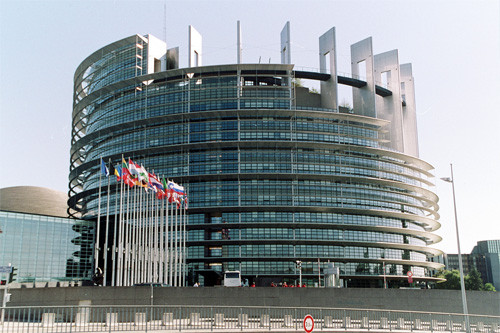
European Parliament, BrusselsThe European Parliament called for a cap on the use of traditional biofuels and a speedy switchover to new biofuels from alternative sources such as seaweed and waste, in a vote on draft legislation yesterday. So called “first-generation” biofuels – from food crops – should not exceed 6% of fuel used in transport by 2020, amending the target from 10%.The measures aim to reduce greenhouse gas emissions that result from the increasing turnover of agricultural land to biofuel production.
New proposals which aim to limit the percentage of biofuels that can be used in transport fuels continue to divide opinion among European policymakers and stakeholders.
The fuel quality directive and renewable energy directive proposal, adopted by parliament’s environment committee, include new rules that take into consideration the impacts of producing biofuel crops.
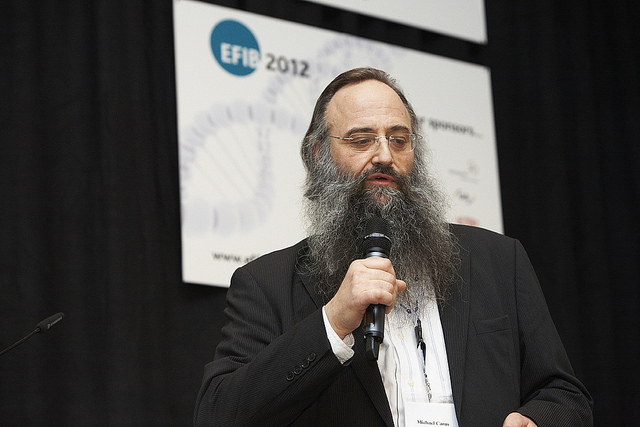
Michael Carus, managing director of the nova-Institut
“A comprehensive analysis of hurdles carried out by nova-Institut shows that the RED (which will in future be associated with the FQD – Fuel Quality Directive 9870 – in the transport sector) is one of the main causes of the longstanding and systematic discrimination between material and energy uses. The RED hinders the development of material use and therefore that of the whole bio-based economy. Unfavorable framework conditions combined with high biomass prices and uncertain biomass supplies deter investors from putting money into bio-based chemistry and plastics – even though these would produce higher value and greater resource efficiency”. To say it is Michael Carus, physicist and managing director of the nova-Institut, the German private and independent Scientific Institute specialized in the bioeconomy, one of the most prestigious at the European level. In this interview with Il Bioeconomista, Carus uses the phrase “Misallocation of biomass” to define the effects of the RED (Renewable Energy Directive), since “this is blocking higher value material uses like chemicals and plastics from coming to fruition”. And explains his point of view on the first generation vs. second generation biofuels issue.
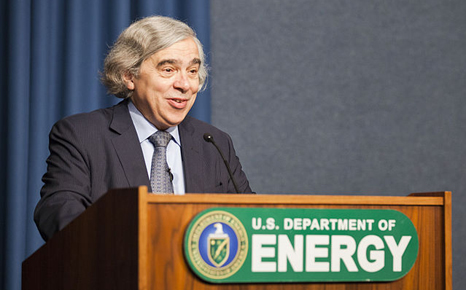
Building on President Obama’s plan to cut carbon pollution, the Energy Department announced last Tuesday four research and development projects to bring next generation biofuels on line faster and drive down the cost of producing gasoline, diesel and jet fuels from biomass. The projects – located in Oklahoma, Tennessee, Utah and Wisconsin – represent a $13 million Energy Department investment.
David Newman, Secretary General of Assobioplastiche
Marine litter caused by plastic bags is threatening the oceans and causing already an ecological disaster . The European Commission is pushing for an ambitious resource efficiency agenda and is struggling to reduce landfills and enforce waste prevention across all Member States. Europe is a leader in the bioeconomy. What do all these facts have in common? More than we think. Italy demonstrated to the world that substituting traditional plastic bags with reusable and biodegradable and compostable ones can be, even at times of crisis, a solution to trigger separate collection rates, enhance waste prevention and unleash new investments in ground breaking technologies. We discussed the Italian case study and the recent reaction of UK against the Italian ban on plastic bags recently reported by several UK media with David Newman, Secretary General of Assobioplastiche, the Italian Bioplastic and Biodegradable and Compostable material Association.






 IL BIOECONOMISTA