Scottish Exhibition and Convention Center, Glasgow
Scotland is set to create waves among the global biotechnology arena as its Industrial Biotechnology Innovation Centre (IBioIC) announces over £3 million of investment across six game changing synthetic biology projects including greener skincare products, more sustainable plastics and improvements to personalised medicine therapies.
BASF and the Dutch leading chemical technology company Avantium yesterday announced that they have established a joint venture (JV) called Synvina for the production and marketing of furandicarboxylic acid (FDCA) produced from renewable resources (fructose from plants as feedstock rather than conventional oil derivatives), as well as marketing of polyethylenefuranoate (PEF), based on this new chemical building block.
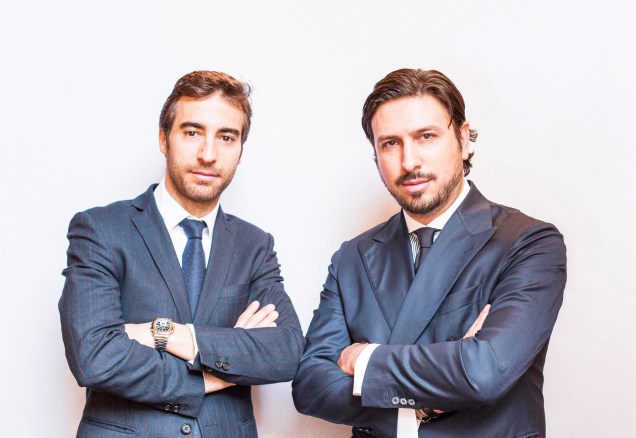
Mathieu Flamini and Pasquale Granata launch The BioJournal
Published “to take part in a severe contest between intelligence, which presses forward, and an unworthy, timid ignorance obstructing our progress.”
We can borrow this mission statement written on the contents page of the first issue of The Economist, published by James Wilson in September 1843, to define exactly the reason that today, 173 years later, leads to the launch of The BioJournal.
She has created the Italian bioeconomy. Thanks to her passion, her tenacity, her ability, Italy today can rightly claim to be a leading country in this field. All this in the total lack of an Italian strategy on bioeconomy.
The inauguration last Friday of Mater Biotech’s plant in Bottrighe di Adria, the first in the world capable of producing butanediol from renewable sources, is her umpteenth great victory. The demonstration that the bioeconomy is a reality, that creates wealth and jobs in an environmentally friendly way. That the goals can be achieved with passion and determination, putting into practice a new idea of sustainable enterprise.
The Coca-Cola Company pavilion at Expo Milano 2015
Virent established a strategic Consortium with Tesoro, Toray, Johnson Matthey and The Coca-Cola Company focused on completing the development and scale up of Virent’s BioForming® technology to produce low carbon bio-based fuels and bio-paraxylene (a key raw material for the production of 100% bio-polyester). The Consortium members will work together to finalize technical developments and commercial arrangements, with the objective of delivering a commercial facility to produce cost effective, bio-based fuels and bio-paraxylene.
The bioeconomy is alive and is set to grow. This is the strong message coming from Vicenza, Italy, where last Thursday and Friday was held the sixth edition of IFIB, the Italian Forum on Industrial Biotechnology and Bioeconomy.
About 300 participants. Among them some of the big global companies active in the bioeconomy: Braskem, Dow, Novamont, NatureWorks, Mossi Ghisolfi, Clariant, GFBiochemicals and Carlsberg. Innovative start-ups, universities and research centers, as well as clusters such as Clib2021 (Germany), IAR Pole (France) and Bio-based Delta (Netherlands). And again: OECD, European Investment Bank, German Bioeconomy Council.
“Sustainability – Rafael Cayuela, Chief Economist at Dow Chemical, stated – is a huge technological challenge but also the single largest business opportunity of this generation”.
Renmatix, the U.S. leader in affordable cellulosic sugars headquartered in King of Prussia (Pennsylvania), announced a $14 million investment, led by Bill Gates. Industry demand for competitive alternatives to petro-derived molecules is gaining traction, despite recent market pressures. In the interest of expanding that supply, the Plantrose® process provides an enabling technology for profitable biorefineries. This investment in commercializing Plantrose will help drive towards the first wave of Renmatix licensees building Plantrose-enabled biorefineries in diverse global markets like Canada, India, Malaysia, the U.S. and elsewhere. In parallel, that activity will facilitate further market development in downstream bioproduct applications.
Neste and Ikea of Sweden yesterday announced partnership to deliver renewable, bio-based plastics. The two Scandinavian companies have joined forces to take leadership in renewable, bio-based materials, and invite other companies to join the initiative.
The partnership includes the production of plastics and other materials utilizing Neste’s renewable solutions in polymer production.
The U.S. Department of Agriculture selected the Safety Equipment Institute – a subsidiary of ASTM International – to manage the certification program that supports labeling thousands of products as “biobased.” The renewal of this five-year contract will mean that more and more people will be able to find and purchase products that are made and packaged using renewable materials.
CUOA Business Center (Villa Valmarana Morosini in Altavilla Vicentina)
Everything is ready in Altavilla Vicentina (Vicenza, Italy) to host the Italian Forum on Industrial Biotechnology and Bioeconomy. Taking place on 22-23 September at CUOA Business Center, IFIB 2016 will bring together the European bioeconomy stakeholders, from universities and research centers to big companies.


 She has created the Italian bioeconomy. Thanks to her passion, her tenacity, her ability, Italy today can rightly claim to be a leading country in this field. All this in the total lack of an Italian strategy on bioeconomy.


 Neste and Ikea of Sweden yesterday announced partnership to deliver renewable, bio-based plastics. The two Scandinavian companies have joined forces to take leadership in renewable, bio-based materials, and invite other companies to join the initiative.
 The U.S. Department of Agriculture selected the Safety Equipment Institute – a subsidiary of ASTM International – to manage the certification program that supports labeling thousands of products as “biobased.” The renewal of this five-year contract will mean that more and more people will be able to find and purchase products that are made and packaged using renewable materials.
 IL BIOECONOMISTA