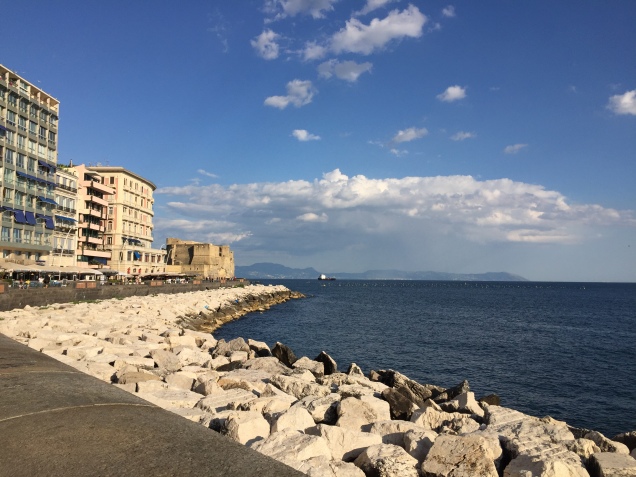
 Naples, Southern Italy. In that part of the country that governments, since the Unification of Italy, have consciously and culpably left behind. Naples, a city that is the mirror of the Italic contradictions and of a South which is struggling to emerge: Naples the Rich, Naples the Poor, Naples the Noble, Naples the Plebeian, Naples and its many colors, Naples in black like the pitch which is brought by the boats of its sea.
Technology
A European Union-backed project to produce biofuels from algae moves a step forward in Spain
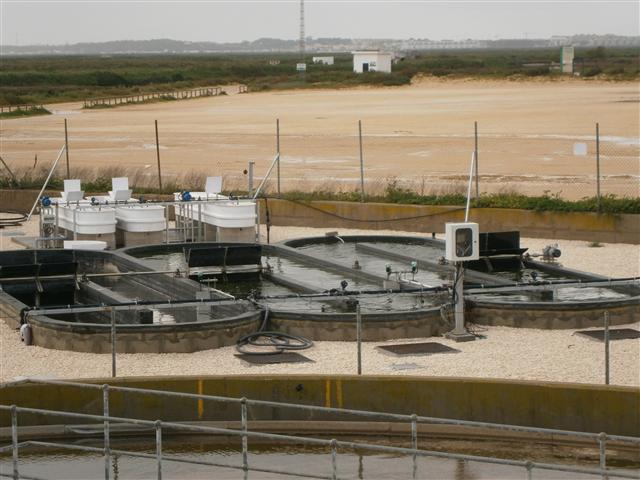
A European Union-backed project to produce biofuels from algae moved a step forward last Thursday by producing its first crop of algae biomass at its site in Southern Spain. The “All-gas” project will cultivate fast-growing micro-algae by using the nutrients in wastewater and then by further processes generate biomethane which can be captured and used in transport fuel.
Continue reading
The Italian revolution in the world of plastics: plastic coming from food waste

It’s a revolution in the world of plastics: plastic coming from food waste. To achieve it is an Italian company in the province of Bologna: Bio-On. The owners of the company, set-up in 2007, are Marco Astorri and Guy Cicognani, former entrepreneurs in the field of electronic components for ski passes. Where is the link? Seeing those little cards abandoned in the valley, never decomposing, Astorri wondered if they could melt, like snow in the sun.
Foresight and UK Green Investment Bank complete £20 million Northern Ireland investment
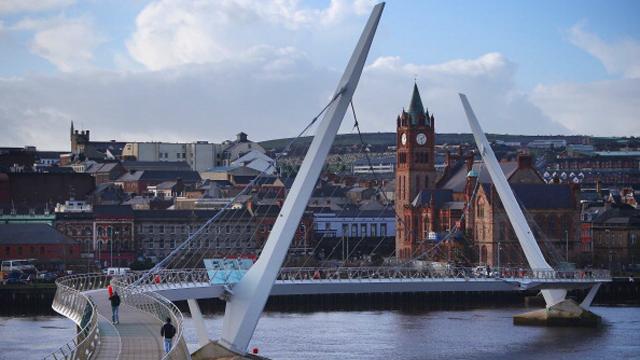
Foresight Group – a leading, independent alternative asset manager with current assets of over £650 million – and the UK Green Investment Bank – the bank created in 2012 to accelerate the UK’s transition to a green economy and to create an enduring Institution, operating independently of Government – have invested £20 million into the construction of the Evermore Renewable Energy (15.8MWe) wood fuelled combined heat and power (CHP) station to be built in Derry/Londonderry, in Northern Ireland. The Foresight managed fund, UK Waste Resources & Energy Fund (Ukwrei), in which the Green Investment Bank is the cornerstone investor, has made the investment, which is the first GIB funded project in Northern Ireland.
Evonik’s new step forward in the production of bioplastics

Another step in the bioeconomy for Evonik, the German company based in Essen, which is one of the world’s leading specialty chemicals companies, with sales of 13.6 billion euros and an operating result (adjusted EBITDA) of 2.6 billion in 2012. In early 2013, Evonik Industries began operating a pilot plant for ω-amino lauric acid (ALS) in Slovenska Lupca, Slovakia. The effort represents Evonik’s next step forward in the production of sustainable high-performance plastics.
UK’s government approves a £250 million biomass power station on the Northumberland coast
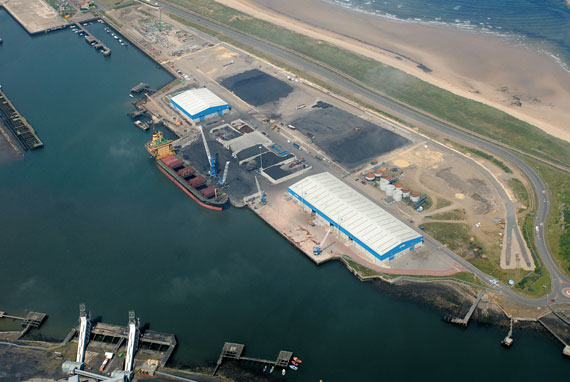
North Blyth Energy Ltd has been given permission to build the 100mw plant at Battleship Wharf, Blyth Harbour. Parent company RES, leading British renewable energy company, said the project would provide “significant investment” and jobs in the area. Once operational the 100mw power station will be able to generate low carbon electricity to power the equivalent of over 170,000 UK households every year using sustainably sourced wood-based fuel.
Interview with Nathalie Moll (EuropaBio): In Brussels at EFIB to meet, discuss and shape the future of the bioeconomy
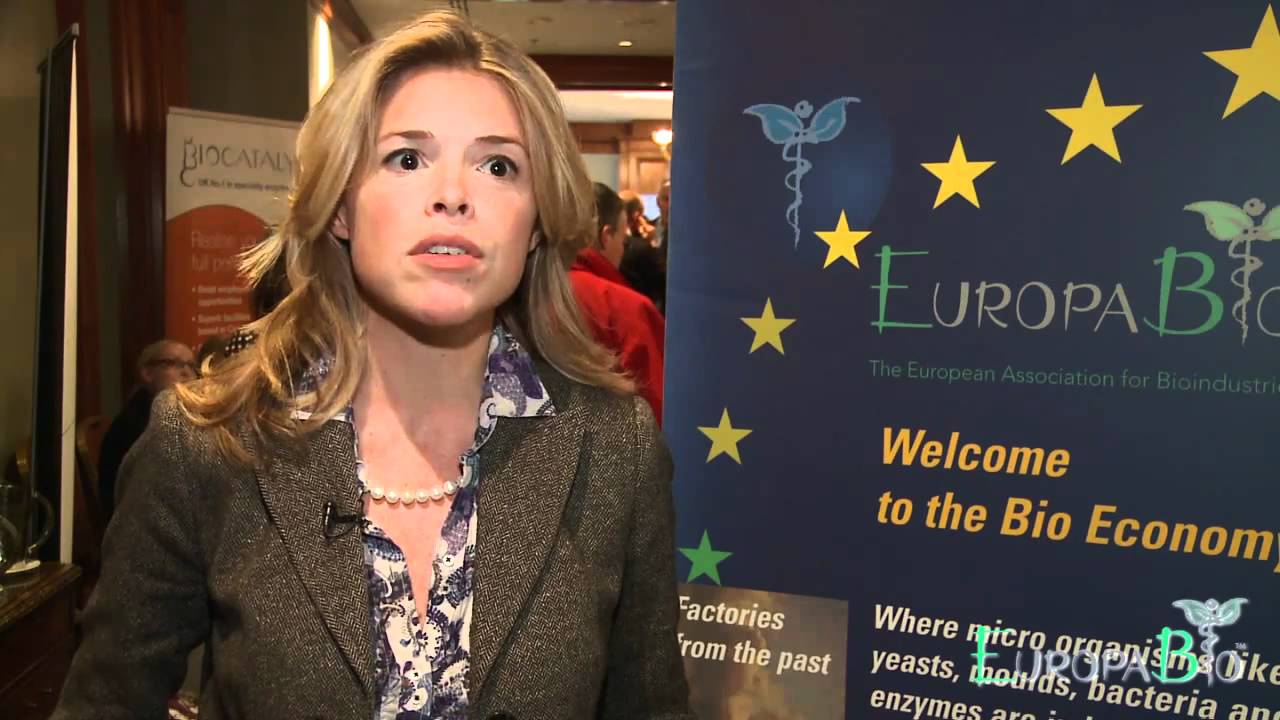
“We believe that EFIB (European Forum for Industrial Biotechnology and Bio-based Economy, editor’s note), taking place during the first European Biotech Week, contributes to increase the awareness of Europeans to the bioeconomy.” To say it is Nathalie Moll, Secretary General of EuropaBio, The European Association for Bioindustries, one of the organizers, with Smithers Rapra, of the event which will be held in Brussels from 30 September to 2 October. In this interview with Il Bioeconomista, Moll talks about EFIB – “a single platform for European business leaders, innovators and policymakers to meet, discuss and shape the future of the bioeconomy” – and the latest development of European Bioeconomy, focusing on the Public Private Partnership for Biobased industries (Bridge), “a multisector initiative whose vision is that of a society and economy which increasingly makes everyday products, such as food, feed, textiles, chemicals and fuels, from locally sourced biomass and wastes, rather than from fossil fuels.”
Interview by Mario Bonaccorso
Heinrich Hiesinger, ThyssenKrupp Ceo: “Industrial Biotechnology is part of our growth strategy”

Europe’s first multi-purpose fermentation plant for the continuous production of bio-based chemicals has been recently inaugurated in Leuna, Saxony-Anhalt (Germany). Built at a cost of around 20 million euros, the facility will enable the German multinational conglomerate corporation ThyssenKrupp, one of the world’s largest steel producers (more than 43 billion euros in revenue), to further expand its research and development activities in the area of biochemicals based on renewable raw materials.
Interview with David Newman: The Italian approach in reducing the use of plastic bags

Marine litter caused by plastic bags is threatening the oceans and causing already an ecological disaster . The European Commission is pushing for an ambitious resource efficiency agenda and is struggling to reduce landfills and enforce waste prevention across all Member States. Europe is a leader in the bioeconomy. What do all these facts have in common? More than we think. Italy demonstrated to the world that substituting traditional plastic bags with reusable and biodegradable and compostable ones can be, even at times of crisis, a solution to trigger separate collection rates, enhance waste prevention and unleash new investments in ground breaking technologies. We discussed the Italian case study and the recent reaction of UK against the Italian ban on plastic bags recently reported by several UK media with David Newman, Secretary General of Assobioplastiche, the Italian Bioplastic and Biodegradable and Compostable material Association.
Interview by Isabella Dalbelgio
(from Brussels)
Nova-Institut: “All kind of biomass should be accepted for industrial uses”
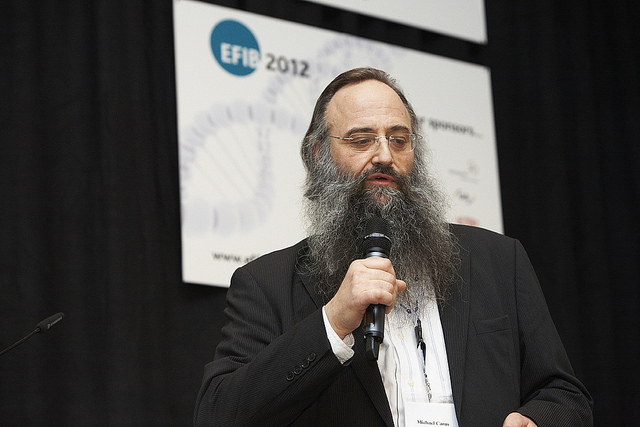
Food or non-food: Which agricultural feedstocks are best for industrial uses? This is the title of the new paper published by the German nova-Institut led by Michael Carus, who is one of the author, together with Lara Dammer. In less than ten pages the two authors analyze one of the most controversial issues of the bioeconomy, also underlined by the recent decision of the European Parliament’s environment committee to limit the share of food-based biofuel used in cars and trucks to 5.5% of the total consumption. Continue reading
 IL BIOECONOMISTA