Coinciding with the Hungarian Presidency of the Council and following on from their European Union conference, “BIOEAST and Beyond: Partnering for the Future”, the Bio-based Industries Consortium (BIC), published “Mapping Hungary’s bio-based potential”, highlighting the many untapped green commercial opportunities in the country.
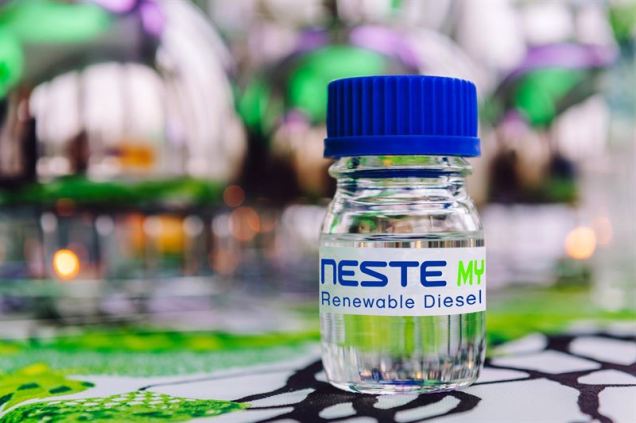
Neste and Bayer, a global enterprise with core competencies in the life science fields of health care and agriculture, signed a memorandum of understanding aimed at developing a winter canola ecosystem in the U.S, including identifying partners and developing the value chain together, and scaling winter canola production as a raw material for renewable products.
Jennifer Holmgren, CEO LanzaTech, at IFIB 2019 in Naples
The U.S. Department of Energy (DOE) Office of Clean Energy Demonstrations (OCED) has committed up to $200 million in federal funding and authorized the initiation of Phase 1 of Technip Energies and LanzaTech Global’s Sustainable Ethylene from CO2 Utilization with Renewable Energy Project.
Aramco, TotalEnergies, and Saudi Investment Recycling Company (SIRC), the major player which collects and valorizes organic materials into sustainable products in Saudi Arabia, signed a Joint Development and Cost Sharing Agreement (JDCSA) to assess the development of a sustainable aviation fuels (SAF) production unit in the Kingdom of Saudi Arabia. This signature was done on the occasion of the visit of the President of the French Republic Emmanuel Macron to the Kingdom of Saudi Arabia, and in the presence of His Royal Highness Prince Abdulaziz bin Salman Al Saud, Saudi Minister of Energy,
Metsä Group introduces voluntary nature compensation measures in its environmental deviations. Part of regenerative forestry, nature compensation overcompensates the harm to nature resulting from any legal violations. The operating model ensures that corrective measures linked to defective performance result in greater benefit than harm to nature. Nature compensation will be applied in matters related to the Nature Conservation Act and the Forest Act – key legislation in terms of biodiversity.
Futerro S.A., a pioneering Belgian company specializing in the production of lactic acid, lactide and PLA (polylactic acid), closed its first fund-raising worth €12 million in preparation for the construction of its new biorefinery in Normandy. In addition to its historical shareholders, Finasucre and Compagnie du Bois Sauvage, Futerro has a new shareholder, Cybelle, whose shareholder is a major player in the packaging sector for the food industry, via the Cedap group.
European Bioplastics concluded two days of insightful presentations, panel discussions and market data analysis. Around 350 attendees gathered in Berlin and online to attend the 19th edition of the European Bioplastics Conference, EBC24.
Our readers have voted. The most innovative bioeconomy CEO 2024 is Frederic Van Gansberghe, CEO of Futerro, a a pioneer and world leader in bioplastics with the development and production of Poly-Lactic Acid (PLA, also called FUTERRO RENEW®). PLA is a well-recognized biopolymer able to replace a large number of traditional petro-based plastic used in several applications.
“Bioeconomy in everyday life” @ BioBased World 2015 in Frankfurt am Main
The circular bioeconomy is innovation, the result of the skills and passion of researchers and managers able to create value and new high-qualified jobs, reconciling economy, society and the environment. At the end of 2014 Il Bioeconomista launched a new initiative: The 10 Most Innovative Bioeconomy CEOs.
We have asked a panel of world bioeconomy experts to tell us the Chief Executive Officers that have stood out as the most innovative during the last year.
Now we ask you to choose the most innovative CEO responding to our survey (open till December 13 at 7 am, Central Europe Time).