PoliKompleks invests 30 million euros to construct a bioplastics plant in Russia

moscowPoliKompleks, a Russian industrial biotechnology company, plans to invest around 1,2 billion rubles, 30 million euros, to construct a bioplastics production complex in Russia’s far western enclave of Kaliningrad. To say it is Nikolai Tsukanov, governor of the Kaliningrad Region.

PoliKompleks has reached agreement to establish plants for products based on lactic acid and polylactides (PLA) for the manufacture of some 50,000 tpa of biocomposites. The complex will also have a biodegradable de-icing reagents plant with a capacity of around 12,000 tpa. The Russian company expected to reach an annual turnover of 1,4 billion rubles, approximately 34 million euros.

Continue reading

In EU Synpol project aims at converting waste into bioplastics

only plasticsWaste can be base of new bioplastics. There are many waste resources hidden in our communities. Municipal solid waste (MSW), agricultural residues and sewage sludge from water treatment plants contains lots of reusable carbon fractions. To recover them means recovering a valuable product as well as preserving the environment. The European Commission is working in order to develop the Synpol (“Biopolymers from syngas fermentation”) project, that is funded under the Food, agriculture and fisheries, and biotechnology Theme of the EU’s Seventh Framework Programme (FP7) to the tune of € 7.5 million.

Continue reading

European Bioplastics publishes data on land-use for bioplastics

sugar-cane.jpgThe surface required to grow sufficient feedstock for today’s bioplastic production is less than 0.006 percent of the global agricultural area of 5 billion hectares. This is the key finding published by European Bioplastics (the association representing the interests of Europe’s bioplastics’ industry), based on figures from the Food and Agriculture Organization of the United Nations (FAO) and calculations of the Institute for Bioplastics and Biocomposites (IfBB, University Hannover, Germany).
In a world of fast growing population with an increasing demand for food and feed, the use of feedstock for non-food purposes is often debated controversially. The new brochure “ Bioplastics- facts and figures” published by European Bioplastics, moves the discussion on to a factual level.
Of the 13.4 billion hectares of global land surface, around 37 percent (5 billion hectares) are currently used for agriculture. This includes pastures (70 percent, approximately 3.5 billion hectares) and arable land (30 percent, approximately 1.4 billion hectare).


Continue reading

UK’s Biome Bioplastics to investigate new source of organic chemicals for bioplastic manufacture

wood in ukThe UK’s innovation agency, the Technology Strategy Board, has awarded a grant to a consortium led by Biome Technologies, to investigate a bio-based alternative for the oil derived organic chemicals used in the manufacturer of bioplastics.

The research will be undertaken by the group’s bioplastic division Biome Bioplastics, one of the UK’s leading developers of natural plastics, in conjunction with the University of Warwick’s Centre for Biotechnology and Biorefining.

The £150,000 grant (approximately 215,000 €) is part of the Technology Strategy Board’s ‘Sustainable high value chemical manufacture through industrial biotechnology’ technical feasability competition, which funds projects that apply sustainable bio-based feedstocks and biocatalytic processes in the production of chemicals.

Continue reading

Bioplastics: the Italian holistic approach to bioeconomy

EU ParliamentBrussels spoke Italian last Wednesday. On the eve of the official presentation of the “Green paper on plastic waste” by the European Commissioner for the Environment Janez Potočnik, Kyoto Club presented on 6 March the European Parliament with “Bioplastics: A case study of Bioeconomy in Italy. A smart chemistry for a smarter life in a smarter planet”, a book – edited by Walter Ganapini – on the Italian experience of regulating the distribution of disposable plastic bags, in order to reduce environmental pollution.

The book presents the “Italian case” of bioeconomy, whose roots lie in the evolution of research and innovation in the biodegradable bioplastics sector on the one hand, and the virtuous development of the quality compost industry and separated municipal waste collection on the other. The connections between these two developments over the years have set in motion a whole series of virtuous modes of action and collaboration initiatives between various stakeholders (enterprises, institutions, research bodies, trade associations, consultancy companies and regional authorities) generating a connective tissue that is ideal to promote a change in the development model, putting the efficient use of resources at the centre.

Continue reading

È il giorno della bioeconomia italiana a Bruxelles

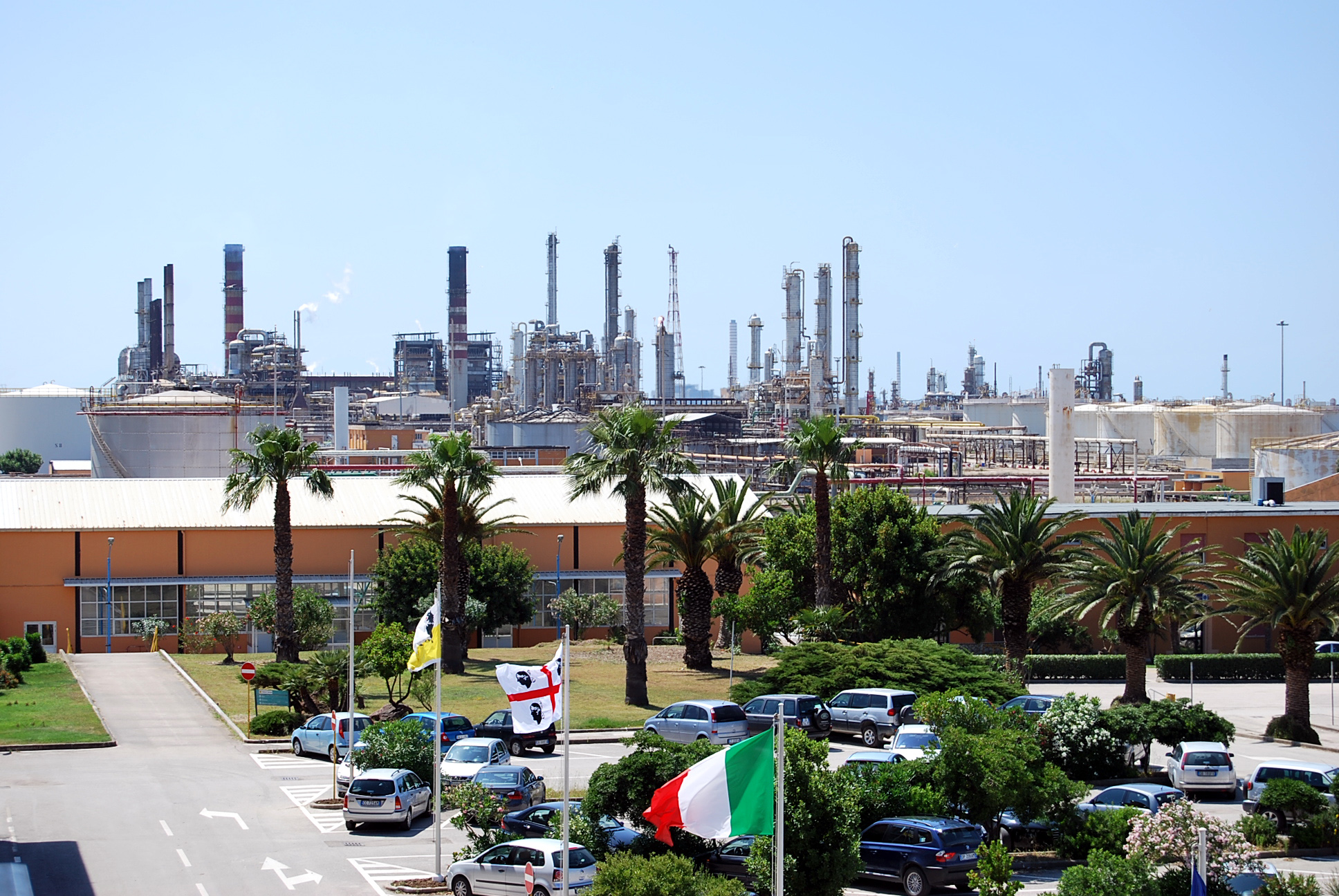
porto torres bioraffineria matrìcaÈ il giorno della bioeconomia italiana a Bruxelles. Nella sede del Parlamento europeo si terrà oggi il convegno “BioPlastics: A case study of Bioeconomy in Italy in the light of Horizon 2020”, promosso dal Kyoto club con il patrocinio del nostro ministero dell’Ambiente.

Obiettivo: illustrare come l’Italia stia delineando una strategia capace di dare un nuovo impulso al potenziale di innovazione del paese e di sviluppare il settore della bioeconomia.

L’adozione di misure ”market pull” che incentivano la produzione e l’utilizzo di prodotti biodegradabili da materie prime rinnovabili ha dato vita ad importanti investimenti in tecnologie innovative e bioraffinerie (come quella di Porto Torres gestita da Matrìca, la joint venture tra Versalis-Eni e Novamont attiva nel campo della chimica verde, nella foto) e sta generando ricadute positive per l’intera società in termini di riduzione dei rifiuti e di introduzione di criteri di sostenibilità nelle scelte di consumo dei cittadini. Attraverso la presentazione dell’esempio italiano, la conferenza intende dimostrare che l’efficienza delle risorse non rappresenta soltanto un’esigenza strategica per l’Europa, ma anche una vera e propria opportunità dal punto di vista economico, capace di rilanciare la crescita in aree affette da profonda crisi.

Continue reading

New Zealand meat-based bioplastics in commercial use by 2016

university of waikatoAduro Biopolymers, a natural resource materials and biopolymer company based in Hamilton, New Zealand, hopes to see its meat-based bioplastic, called Novatein, in commercial use by 2016 or 2017. The company, that is a spin-out of the University of Waikato, has announced it has secured investment from Wallace Corporation, by volume New Zealand’s largest service rendering business, processing a variety of co-products from the meat processing industry.

Aduro was formed to develop and market materials and biopolymers for use in the manufacturing sector and is currently developing a novel material based on an unconventional idea; turning bloodmeal into bioplastic.

Continue reading

Bioplastics made from algae: Cereplast incorporates Algaeplast

cereplastNew transaction in the field of bioplastics. Cereplast, a leading US manufacturer of proprietary biobased, compostable and sustainable bioplastics, that since 1996 has the exclusive North American distribution rights to Novamont’s Mater-Bi resins, has announced the incorporation of a new wholly owned subsidiary, Algaeplast, Inc.

Algaeplast’ s focus will be the development and manufacture of algae-based bioplastics. Cereplast has been a pioneer in algae-based plastics, helping to bring the first products made from Cereplast Algae Bioplastics grades to market in 2011, and with the recent commercialization of Biopropylene 109D in December of 2012.

Cereplast introduced the concept in late 2009, with a target of reaching a bioplastic made from 50% algae bio-content. Algaeplast’s ultimate goal is to bring to market new polymers made from 100% algae content. Recently, the Company commercialized small quantities of Biopropylene 109D, a compound with 20% post-industrial algae biomatter. The research and development team is currently developing a grade with a higher percentage of algae bio-content. Based on customer interest, the company has determined that the demand for bioplastics made from algae is significant, and therefore has created Algaeplast, which will focus on this new sector. Algaeplast has been created to develop a new monomer and polymers made from algae.

Continue reading