The bioeconomy is today, in our everyday life: Reverdia’s Biosuccinium® has been used in the production of biobased materials for VAUDE’s new Skarvan range. As part of the completely redesigned Summer 2018 Shoe Collection, they offer consumers a sustainable choice of trekking shoe with high-end design.
“Clusters can set an environment for investment and implementation. They can bring the right people together and help to identify both hurdles and how to overcome them, for example by scouting technologies or helping to find access to funding”. To say it – in this long and exclusive interview with Il Bioeconomista – is Tatjana Schwabe, scientific advisor at CLIB2021, the German cluster of industrial biotechnology based in Düsseldorf. With Schwabe with talk about the role of clusters in supporting the European bioeconomy.
Avantium, the Dutch forerunner in renewable chemistry, locates a new pilot biorefinery at Chemie Park Delfzijl, in the Netherlands. Avantium and chemical giant AkzoNobel have signed a contract for the pilot plant accommodation and the supply of various facilities and services. The pilot plant will validate the technical and economic feasibility of Avantium’s Zambezi process, which aims to convert woodchips and other second generation biomass into raw materials for the chemical industry. This is an essential step in scaling up the technology from lab to commercial operations.
Arkema will invest some 300 million euros over five years in the biosourced polyamide 11 chain. This major investment will enable the French chemical group to increase by 50% its polyamide 11 global production capacities. The project falls in line with Arkema’s strategy to speed up its development in advanced materials, one of the key pillars of its future growth, sustained by a unique portfolio of innovations around the main sustainable development trends.
There is a new partnership in the world bioeconomy. Indian Oil Corporation Limited, India’s flagship national oil company and, LanzaTech, carbon recycling company based in Illinois, signed a Statement of Intent to construct the world’s first refinery off gas-to-bioethanol production facility in India.
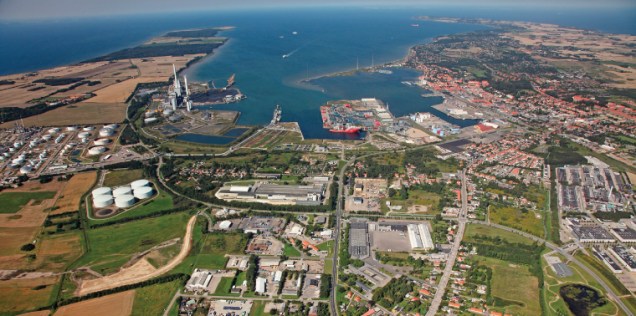
Aerial view of Kalundborg sustainable industry complex
Novozymes, Novo Nordisk, Kalundborg Forsyning and DONG Energy signed a new 20-year agreement which enables Denmark’s largest coal-fired power station unit, the Asnæs Power Station, to phase out coal and replace it with wood chips. Novozymes sources steam from the power station.
“The UK cannot solve the problem on its own, and we will need to collaborate with foreign governments and companies if we are to truly tackle the crisis ahead.” To say it referring to Brexit – in this exclusive interview with Il Bioeconomista – is Jaymin Amin, COO at Ingenza, the spin-out from the University of Edinburgh founded in 2002, which is today one of the most dynamic European industrial biotech company. With Amin we talk about industrial biotechnology and bioeconomy in Scotland.
The Metsä Group’s bioproduct mill start-up will begin in mid-August, and pulp deliveries from the new mill to customers will begin in early September. The current pulp mill at Äänekoski – the company announced – will be shut down once the bioproduct mill starts up.
ExxonMobil, the largest publicly traded petroleum and petrochemical enterprise in the world, and Synthetic Genomics Inc., a global leader in the fields of synthetic biology and synthetic genomics, achieved a breakthrough in joint research into advanced biofuels involving the modification of an algae strain that more than doubled its oil content without significantly inhibiting the strain’s growth.
Finnish Neste is focusing its raw materials research on waste plastics as a substitute for crude oil in the manufacture of oil products. The idea of “one’s waste is a valuable raw material to another” is central to the circular economy, and, for over a decade, it has inspired Neste’s development and production of renewable fuels. The company headquartered in Espoo already produces enough Neste MY Renewable Diesel, produced of waste and residues, to power more than two million cars for a year. This will enable Neste’s customers to reduce their greenhouse gas emissions by almost 7 million tons this year. Underpinning this progress is the company’s patented NEXBTL technology for refining low-quality waste fats into high-quality, fully renewable fuel. The same technology can be used to produce other renewable products also, such as renewable aviation fuel and raw material for bioplastics.
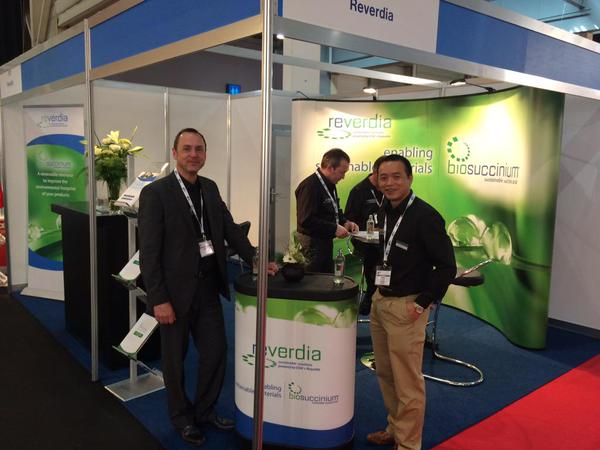 The bioeconomy is today, in our everyday life: Reverdia’s Biosuccinium® has been used in the production of biobased materials for VAUDE’s new Skarvan range. As part of the completely redesigned Summer 2018 Shoe Collection, they offer consumers a sustainable choice of trekking shoe with high-end design.
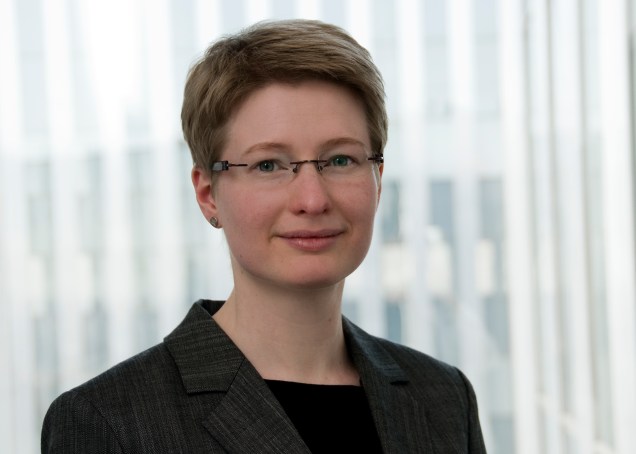 “Clusters can set an environment for investment and implementation. They can bring the right people together and help to identify both hurdles and how to overcome them, for example by scouting technologies or helping to find access to funding”. To say it – in this long and exclusive interview with Il Bioeconomista – is Tatjana Schwabe, scientific advisor at CLIB2021, the German cluster of industrial biotechnology based in Düsseldorf. With Schwabe with talk about the role of clusters in supporting the European bioeconomy.
 Arkema will invest some 300 million euros over five years in the biosourced polyamide 11 chain. This major investment will enable the French chemical group to increase by 50% its polyamide 11 global production capacities. The project falls in line with Arkema’s strategy to speed up its development in advanced materials, one of the key pillars of its future growth, sustained by a unique portfolio of innovations around the main sustainable development trends.


 ExxonMobil, the largest publicly traded petroleum and petrochemical enterprise in the world, and Synthetic Genomics Inc., a global leader in the fields of synthetic biology and synthetic genomics, achieved a breakthrough in joint research into advanced biofuels involving the modification of an algae strain that more than doubled its oil content without significantly inhibiting the strain’s growth.

