BASF and Genomatica have expanded the scope of their license agreement for the production of 1,4-butanediol based on renewable feedstock (renewable BDO) using Genomatica’s patented process. The parties added certain countries in Southeast Asia to their initial agreement, which focused on North America.
Researchers from the Cardiff Catalysis Institute have devised a way of increasing the yield of biodiesel by using the waste left over from its production process.
Using simple catalysis, the researchers have been able to recycle a non-desired by-product produced when biodiesel is formed from vegetable oil, and convert this into an ingredient to produce even more biodiesel.
Bio-on and Moore Capital signed a license agreement to build the first Brazil-based facility to produce PHAs bioplastic from sugar cane co-products.
The two companies, operating in sustainable biochemistry and in the development of eco-sustainable industrial solutions, will work together to build a production site with a 10 thousand tons/year output, in the state of São Paulo and/or Acre State.
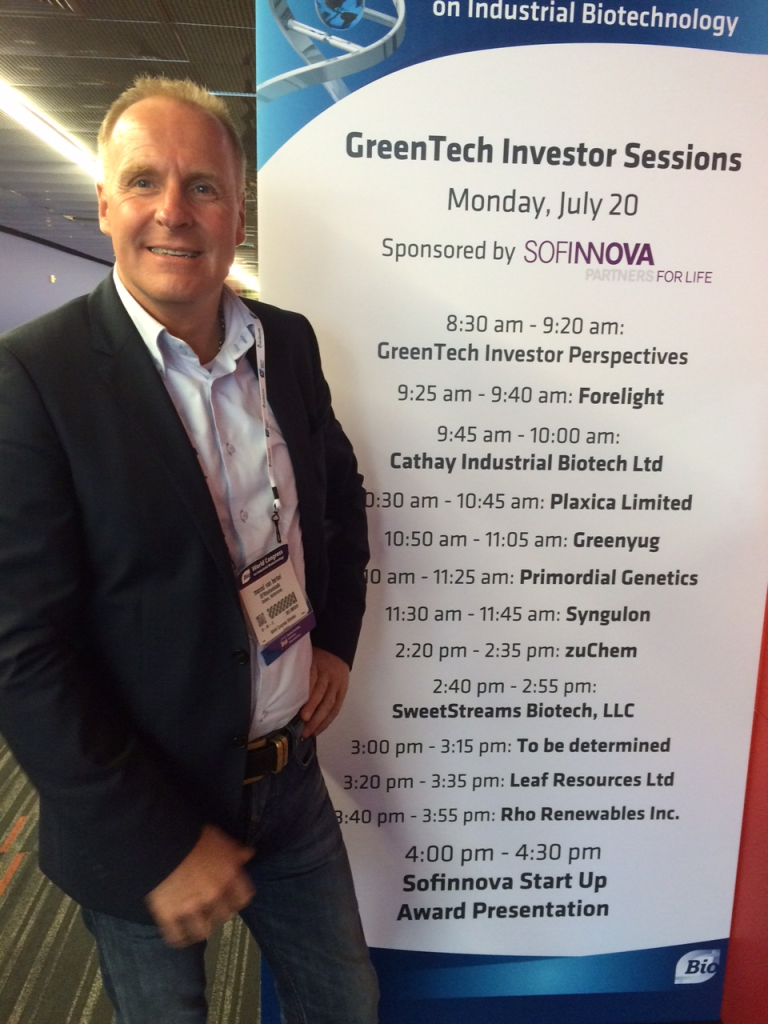
Marcel van Berkel at BIO World Congress in Montreal last July
“We believe that the future of chemistry is bio-based and that levulinic acid is the next big platform chemical. This is driven by the need to tackle climate change and reduce greenhouse gas emissions and our dependency on fossil-based feedstock. Oil reserves are also limited. This is nothing new, more a question of when we will be forced to move away from oil. Rather than wait and see, we prefer to be pioneers of the emerging bioeconomy bringing bio-based solutions like levulinic acid and its derivatives to the market”. Marcel van Berkel, Chief Commercial Officer of GFBiochemicals, talks to Il Bioeconomista.
Marc Delcourt, co-founder and CEO of Global Bioenergies
Global Bioenergies has joined aireg, Aviation Initiative for Renewable Energy in Germany. The French industrial biology company, which is currently developing its demonstration plant in Leuna, Germany, will soon be able to produce alternative jet fuel from sugars. Through their cooperation both organizations plan to expedite the market uptake of renewable, low-carbon fuels in the aviation sector.
“I am convinced that what we lack today to confirm the value creation potential of the industrial biotechnology are concrete examples of investments to construct real industrial operations that are profitable and that create manufacturing jobs.
So all national and European initiatives – co-investment, easing of regulatory procedures, tax incentives, etc. – that will facilitate risk-taking in the industrial phase will be welcomed to demonstrate the industrial biotechnology’s potential and accelerate its development”. To say it – in this interview with Il Bioeconomista – is Benjamin Gonzalez, founder and CEO of METabolic EXplorer, a French green chemistry company that develops and patents innovative, fermentation-based industrial processes. Waiting for EFIB, the European Forum for Industrial Biotechnology and the Bioeconomy – which will take place next October 27-29 in Brussels – Il Bioeconomista will host a series of interviews with CEOs, who will be guest speakers in Brussels. Today we offer the second, after the first with Ilkka Hämälä, CEO of Metsä Fibre, published last 21 August.
SECOS Group, a leader in sustainable packaging formed through the merger of Cardia Bioplastics and Stellar Films Group in April 2015, announced the successful scale-up production of its “environmentally friendly, high quality and cost competitive Biohybrid™ films” tailored for the global personal care and hygiene product markets. The company manufactures a broad range of Biohybrid™ hygiene films at its Stellar Films Australian cast film manufacturing plant.
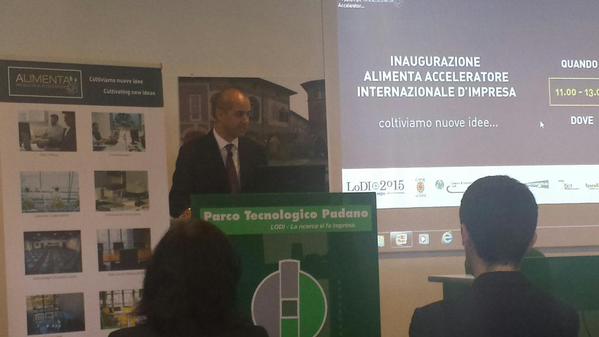
Gianluca Carenzo, General manager of Science Park of Lodi
“At Italian level, probably an interministerial permanent table on Bioeconomy could help in accelerating the development of the agenda. At European level I am sure that a more integrated approach to the CAP (Common Agricultural Policy, editor’s note) at Regional levels will be more than welcome by farmers and industries”. To say it, in this interview with Il Bioeconomista, is Gianluca Carenzo, General Manager of the Science Park of Lodi (Lombardy, Italy) and one of the main protagonist of the Italian bioeconomy.
With Carenzo we talk about the bioeconomy and the last development of the Science Park, which is characterized as one of the first science parks in Europe totally dedicated to the bioeconomy.
They are known throughout the world and admired for their music. Jeremy, Black, Last kiss, Better man: they are just some of the titles of their most famous songs. But Pearl Jam are also supporters of the bioeconomy. The band originally from Seattle and Green Dot, working together with Sea-Lect Plastics, have created a biodegradable luggage tag manufactured locally in the Seattle area. The tags were made as a special gift to members of the band’s popular fan organization, the Ten Club.






 IL BIOECONOMISTA