In Germany more than 60 million euros for the Carbon2Chem project

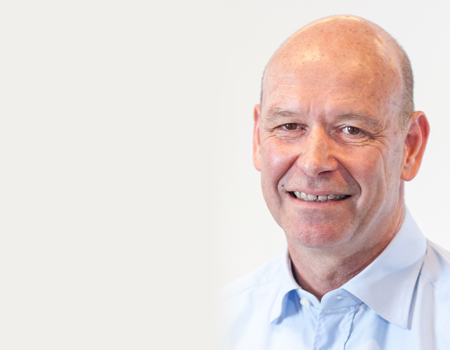
Heinrich Hiesinger, ThyssenKrupp Ceo, in Leuna

In Duisburg yesterday Johanna Wanka, German Minister of Education and Research, announced funding of more than 60 million euros for the Carbon2Chem project initiated by thyssenkrupp. The aim of Carbon2Chem is to convert process gases from steel production – including the CO2 they contain – into base chemicals. The greenhouse gas CO2 would then no longer be discharged into the atmosphere. The energy required for the conversion process is to come from renewable sources. 

Sixteen partners from the areas of basic and applied research and various sectors of industry are involved in the project. thyssenkrupp and the Max Planck Institute for Chemical Energy Conversion have carried out preparatory planning and scientific work. “Carbon2Chem can be an important contribution to climate protection and the transition to renewables,” said Heinrich Hiesinger, CEO of thyssenkrupp AG. Continue reading

The development of the European bioeconomy needs Great Britain and viceversa

image
London leaves and Cameron leaves Downing Street

British voters have voted in favor of Brexit: British exit from the European Union. That means that in the coming months, British and European leaders will begin negotiating the terms of Britain’s departure. Britain’s exit will affect British and EU economies, and also the bioeconomy. It will take years for the full consequences to become clear. From our point of view, as Europeans, it is an absurd. Obviously we do not put in discussion the result of the vote. We simply think that Great Britain  is an integral part of the European Union. The development of the European bioeconomy needs Great Britain and viceversa.

No agreement between Eni and SK Capital on the sale of a majority share in Versalis

image
Daniele Ferrari, Ceo of Versalis-Eni

Eni, the Italian oil giant, announces that the negotiations with the U.S. investment fund SK Capital over the sale of a majority share in Versalis S.p.A. have been terminated due to an impossibility to reach a resolution on certain issues, including the future governance of the company. Therefore, starting from the second quarter results, Eni will fully consolidate Versalis within the group’s accounts.

Continue reading

Biobased Industries and the Vanguard Initiative sign MoU for interregional cooperation

image
Berlaymont, Brussels

Two leading European bioeconomy players, the Bio-based Industries Consortium (BIC) and the Vanguard Initiative, have signed a Memorandum of Understanding (MoU) for better interregional cooperation on the bioeconomy.

The collaboration will support improved access to funding and awareness-raising activities, marrying BIC’s bioeconomy expertise with the Vanguard Initiative’s regional network to help steer Europe away from its fossil-based past and develop novel products for new markets, creating more jobs.

Continue reading

Novamont’s bio-based butanediol plant will be on stream by the next September

image
Catia Bastioli, Ceo of Novamont

Novamont’s bio-based butanediol (BDO) plant in Bottrighe di Adria (Veneto, North-eastern Italy), established as a joint venture (Mater Biotech) with San Diego-based Genomatica and now entirely controlled by the company headquartered in Novara, will come on stream by the end of September. It is a big step forward for the Italian bioeconomy, which is confirmed in its leading role in Europe.

Continue reading

A U.S. warship took its first delivery of Italian-made biofuel

USS Mason
USS Mason

A U.S. warship took its first delivery of Italian-made biofuel on Thursday as part of the Navy’s program to use more alternative energy. The USS Mason was refueled alongside an Italian vessel, the Andrea Doria, in the seas off of Italy’s southern coast with a mix produced by Italy’s Eni that has 5.5 percent palm oil biofuel blended into marine fuel.

Continue reading

The Dutch government is planning to join the Mission Innovation coalition

image
Mark Rutte, Dutch prime minister

The Dutch government is planning to join the Mission Innovation coalition. The global initiative aims to accelerate public and private innovation in order to make clean energy affordable for consumers, as well as creating “green” jobs and commercial opportunities. Mission Innovation was announced by former Microsoft leader Bill Gates at the United Nations Climate Change Conference (COP21) in Paris last year. At the launch, 20 countries – Australia, Brazil, Canada, Chile, China, Denmark, EU, France, Germany, India, Indonesia, Italy, Japan, Mexico, Norway, Republic of Korea, Saudi Arabia, Sweden, UAE, UK and US – committed to doubling their respective clean energy R&D by 2020.

Continue reading

Global Bioenergies, IBN-One, Cristal Union and L’Oréal launch a new bioeconomy project

image
Élysée Palace in Paris

Waiting for the French national strategy, the bioeconomy moves forward in France. Global Bioenergies, IBN-One, Cristal Union and L’Oréal announced yesterday the launch of a 44-month industrial and commercial project focused on the first bio-isobutene plant.

Continue reading

Global companies unite in below50 to scale up sustainable fuels

image

Jennifer Holmgren, Ceo of Lanzatech

Forward-thinking businesses are partnering with the World Business Council for Sustainable Development (WBCSD), Roundtable for Sustainable Biomaterials (RSB) and Sustainable Energy for All (SE4ALL) through a new global initiative called below50, to promote the best-of-breed of sustainable fuels that can achieve significant carbon reductions, and scale up their development and use.

Continue reading

ETLA confirms the strong impact of the Metsä Group’s bioproduct mill on Finnish economy

Mesa Group Aanekoski pulp mill. Source: www.metsafibre.com
Metsa Group Aanekoski pulp mill. Source: http://www.metsafibre.com

Bioeconomy is economic growth and new green jobs. A new evidence comes from Finland. The Research Institute of the Finnish Economy (ETLA) studied the impact of Metsä Group’s bioproduct mill being constructed in Äänekoski in terms of revenue, value added and employment. The impact of the largest investment to date in the history of Finnish forest industry has significant repercussions in the economy during both the construction and the operation of the mill.

According to ETLA’s calculations, the 1.2 billion euro investment in the bioproduct mill will increase the revenue of companies operating in Finland by around 2.4 billion euro at the construction stage, and it will generate value added that will be directly reflected in economic growth in the amount of nearly 1 billion euro during 2015–2018. The annual employment effects arising from construction during 2016 and 2017 total nearly 4,000 person-years when the effects on the value chain and consumption are included in the calculation. This equals 0.16 per cent of the total employed workforce in Finland.

Continue reading