Italian bioplastics company Bio-on signed today an agreement with the Russian TAIF JSC group, which will acquire a license to build the Russian Federation’s first plant producing 100% natural and biodegradable PHAs bioplastic, in the Republic of Tatarstan.
“You know, the name of our company is Italian. Anello (ring in English) wants to mean the circularity, but also the bond as it is represented by the wedding ring”.
It is very pleasant to talk with David Sudolsky, one of the entrepreneurs who is making the bioeconomy happen at global level. He co-founded Anellotechin 2008, secured the initial angel funding for the company, recruited the management team and scientific advisory board, and is leading the expansion of the company.
The company based in New York develops a technology platform for producing petrochemicals and transportation fuels from renewable non-food biomass.
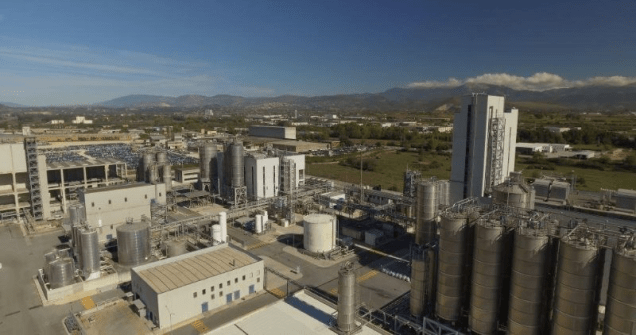
Mater Bipolymer, a 100% company owned by Novamont, today celebrates its Grand Opening in Patrica (Frosinone, Central Italy). The plant represents a new important element of Novamont’s bioeconomy model. “Another virtuous example of territorial regeneration of industrial infrastructures that are no longer competitive”, the company headquartered in Novara claims.
Marc Palahi at the European Bioeconomy Summit in Helsinki
“We need to put emphasis in ensuring that the areas and actions identified in the new Bioeconomy Strategy arestrategically integrated in other European policies and Programmesto ensure coherence, scale and synergies; CAP; Industrial Policy, EuropeanInvestment Bank portfolio, Strategic Partnership for the Implementation of the Paris Agreement, etc.” To say it – in this exclusive interview with IlBioeconomista – is Marc Palahí, director at the European Forest Institute. He talks with us, on his way to China, just after the publication of the updated EU bioeconomy strategy.
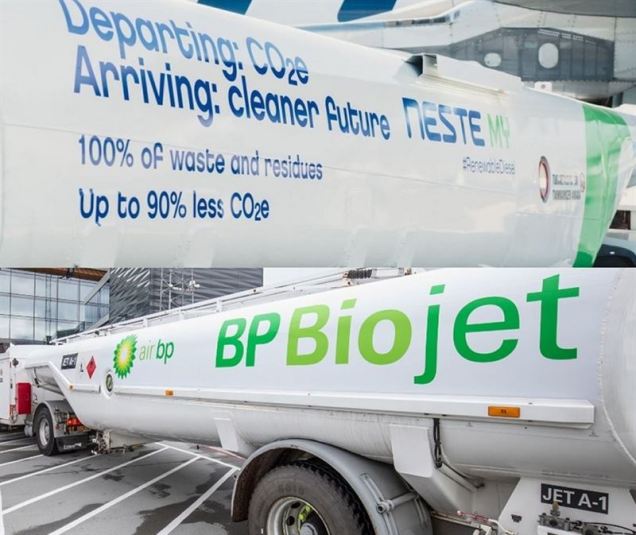
Neste, the world’s leading renewable products producer headquartered in Espoo (Finland), and Air BP, the international aviation fuel products and services supplier, entered into an agreement to explore opportunities to increase the supply and availability of sustainable aviation fuel for airline customers.
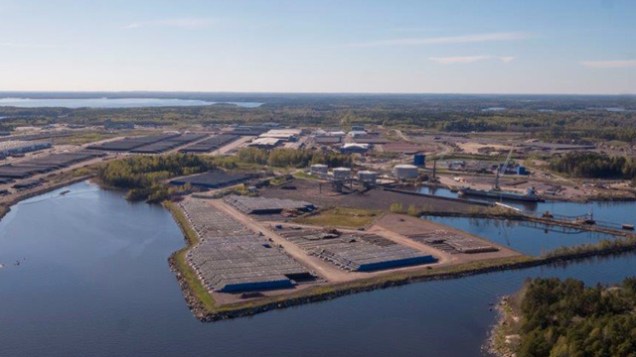
The Environmental Impact Assessment (EIA) for UPM’s possible Kotka Biorefinery in Finland has been completed and given to the authorities for their final conclusions. The UPM Kotka Biorefinery would produce approximately 500,000 tonnes of advanced biofuels made from sustainable raw materials for use in the road transport, marine and aviation sectors. The biorefinery’s products could also be used for replacing fossil raw materials in the chemical industry.
Berlaymont, European Commission’s Headquarter in Brussels
The European Commission launched today the updated Bioeconomy Strategy “A sustainable Bioeconomy for Europe. Strengthening the connection between economy, society and the environment”.
The purpose of this update to the 2012 Bioeconomy Strategy is to address global challenges like climate change, land and ecosystem degradation, through a set of 14 concrete actions which will be launched in 2019 at the latest. These actions reflect the conclusions of the 2017 review of the Strategy.
Braskem is to become a Green Plastic supplier for the traditional Rio de Janeiro-based brand Café Favorito. The first polyethylene of renewable origin to be produced in the world, the resin will be applied in the 500 g coffee pillow packs.
“We produce over one million metric tons of coffee annually, sold mainly in the Lagos and Serrana regions and in the south of the state of Rio de Janeiro. The use of Green Plastic in our packaging reinforces our effort in the search for sustainable performance,” explained Adriana de Oliveira, Chief Commercial Officer of Café Favorito.
Italian Industrial Biotech company Bio-on has been awarded the “Best Practices” award by Frost & Sullivan for New Product Innovation in the Bio-based Ingredients for the Cosmetics industry. In particular the analysts at Frost & Sullivan examined the extraordinary performances of the Minerv Bio Cosmetics bioplastic microspheres designed to replace the polluting oil- based microplastics that are now found in many cosmetic formulations. An innovation certified by Nature and Cosmos that looks set to profoundly transform the beauty products sector.
“We expect full support for the bioeconomy in close connection with the circular economy. Together they can tackle two very pressing societal issues i.e. climate change (through lowering carbon footprint) and the plastic waste problem (through collection, reuse and recycling)”. Marcel Lubben, President of Reverdia, the JV between Royal DSM and Roquette which is producing bio-based succinic acid, talks to Il Bioeconomista. In this exclusive interview he talks about Reverdia and his expectations related to the new EU bioeconomy strategy that will be presented next October 22 in Brussels.




 Braskem is to become a Green Plastic supplier for the traditional Rio de Janeiro-based brand Café Favorito. The first polyethylene of renewable origin to be produced in the world, the resin will be applied in the 500 g coffee pillow packs.


