Canadian Government Invests in Innovative Bio-Resin Technology

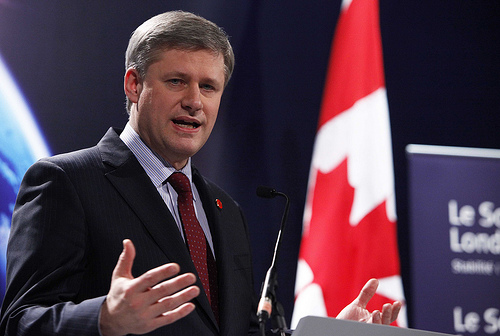
Canadian Prime Minister, Stephen Harper

The Canadian Government, led by Stephen Harper, is enabling a company to commercialize a “green” bio-plastic, using innovative technology that was developed at the University of Guelph, Member of Parliament Dave Van Kesteren (Chatham-Kent-Essex) announced yesterday, on behalf of Agriculture Minister Gerry Ritz.

Continue reading

EFIB 2013: Brussels world capital of the bioeconomy from 30 September to 2 October

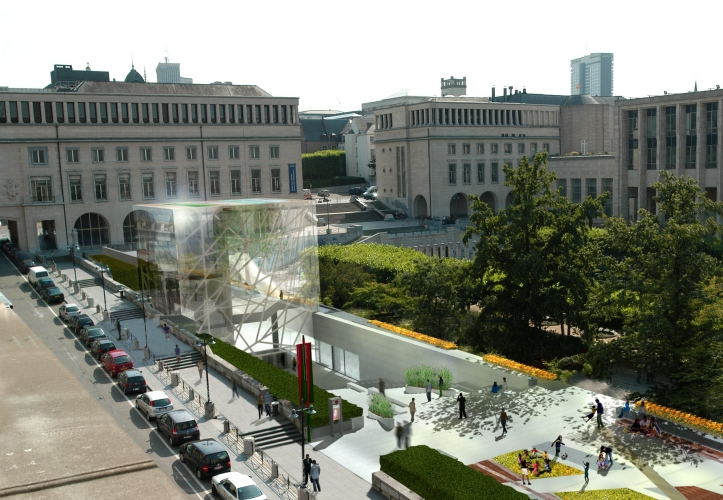
square-brussels-cube-by-dayEuropaBio, The European Association for bio-industries, and Smithers Rapra unveil highly-anticipated agenda for the European Forum for Industrial Biotechnology (EFIB) from 1-2 October 2013 taking place in the heart of Brussels at SQUARE. Officially launched by Elio di Rupo, Prime Minister of Belgium, EFIB’s opening plenary brings together a host of keynote speakers including Rudolf Strohmeier, Deputy Director General R&I at the European Commission; Maria da Graça Carvalho, Rapporteur on Horizon 2020 in the European Parliament and CEOs of Ecover and Galactic. Followed by exciting partnership perspectives from the Plant PET Technology Collaborative and a session lead by Ian Hudson, President of DuPont EMEA, examining the triggers for big business to make the shift towards the biobased economy. All speakers set the scene for another outstanding year, and transform the event from conference to congress.

Continue reading

Cereplast announces new bioplastic resin grade with 51% algae biomass

Seymour-plant-CereplastCereplast, Inc., a leading manufacturer of proprietary biobased, compostable and sustainable bioplastics, has announced a new bioplastic resin grade Biopropylene(R) A150D, an injection molding grade manufactured with 51% post-industrial algae biomass.

The post-industrial algae grade is the first offering with 51% algae content and will be commercially available this quarter. Additionally, the biomass content dramatically reduces the carbon footprint of the final product while reducing the petroleum-based plastic content. Biopropylene A150D has low to no odor due to the discovery of a post-industrial process that significantly reduces the distinctive smell that is inherent to algae biomass.

Continue reading

In EU Synpol project aims at converting waste into bioplastics

only plasticsWaste can be base of new bioplastics. There are many waste resources hidden in our communities. Municipal solid waste (MSW), agricultural residues and sewage sludge from water treatment plants contains lots of reusable carbon fractions. To recover them means recovering a valuable product as well as preserving the environment. The European Commission is working in order to develop the Synpol (“Biopolymers from syngas fermentation”) project, that is funded under the Food, agriculture and fisheries, and biotechnology Theme of the EU’s Seventh Framework Programme (FP7) to the tune of € 7.5 million.

Continue reading

Sprin Technologies: Trieste’s response to the Danish giant Novozymes

trieste“Currently what happens is that innovation created in Italy is then exploited abroad, due to a  lack of direct access to on-site manufacturing facilities or industrial pilot plants. Closer cooperation between SMEs and large companies could accelerate the  scale-up and industrialization steps, which often represent  demanding  investments for SMEs and –in particular at this rather difficult economical stage that translate in very unlikely access to credit, making it not always affordable”.

To say it is Sara Cantone, co-founder and Chief Operating Officer of Sprin, a spin-off of the University of Trieste founded in December 2007 that operates in the research, development, production and commercialization of advanced products for implementing sustainable chemical processes. In particular, Sprin – that since 2010 has had the participation of  Venture Capital, AlAdInn Venture – is focused on the production of immobilized enzymes and the supply of services for the development of bio-catalyzed processes. With Cantone, we talk about the bioeconomy and in particular the role played by the enzymes in its development.

Interview by Mario Bonaccorso


Continue reading

New enzyme reduces the cost of cellulosic sugar production for biofuels and bio-based chemicals

codexis in singaporeCodexis, Inc., a developer of engineered enzymes for pharmaceutical, biofuel and chemical production, announced during the World Biofuels Conference in Rotterdam (The Netherlands) the launch of CodeXyme 4 and CodeXyme 4X cellulase enzyme packages for use in producing cellulosic sugar for production of biofuels and bio-based chemicals.

Codexis’ latest generation of advanced cellulase enzymes, CodeXyme4 for dilute acid pretreatments and CodeXyme 4X for hydrothermal pretreatments, exhibits excellent performance, converting up to 85% of available fermentable sugars at high biomass and low enzyme loads. Combined with high strain productivity using the CodeXporter enzyme production system, this allows for a cost-in-use that the company believes will be among the lowest available once in full-scale commercial production.

Continue reading

The thistle, a new resource for the bioeconomy

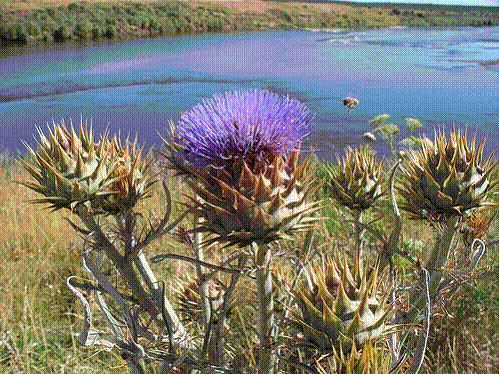
thistleFrom thistle a new era for the agricultural and industrial value chains. An innovative business model, which combines the industrial needs of Matrica, a joint venture between Versalis-Eni and Novamont, with those of farmers located  in northern Sardinia. An agro industrial relationship model, aimed at creating a integrated value chain rooted in the territory in synergy with local biodiversity. These the key issues discussed last Monday in Porto Torres at the second technical meeting on thistle which was attended by numerous high level representatives of the Sardinian agricultural world and by representatives of research and local institutions, including the mayor of Porto Torres, Beniamino Scarpa, and the dean of the University of Sassari, Attilio Mastino.

Continue reading

A Dublino si discute il futuro della Bioeconomia in Europa

parlamento irlandeseÈ tutto pronto a Dublino per il via alla Conferenza degli stakeholders europei della bioeconomia (Bioeconomy in the EU: achievements and directions for the future – potete seguirla in diretta su Twitter @bioeconomista). Nella splendida cornice offerta dal castello che domina la capitale d’Irlanda, Istituzioni, imprese e centri di ricerca provenienti da ogni angolo del Vecchio Continente si confronteranno giovedì 14 e venerdì 15 febbraio sui prossimi passi da realizzare per mettere in atto la strategia per la bioeconomia lanciata lo scorso anno dalla Commissione europea.

Proprio a Dublino si festeggerà il primo anniversario della strategia, di cui principale protagonista è la commissaria alla Ricerca, Innovazione e Scienza,  Máire Geoghegan-Quinn, chiamata a fare da padrona di casa in coincidenza con la Presidenza irlandese dell’Unione europea.

Continue reading

Il secondo mandato di Obama è bio-based

secondo mandato obamaBarack Obama ha giurato per il suo secondo mandato. Nel discorso inaugurale pronunciato a Washington ha toccato tutti i temi del dibattito politico americano: economia, sanità, cambiamenti climatici (un punto su cui ha insistito molto e che invece era rimasto in secondo piano durante la campagna elettorale), armi da fuoco, diritti civili di donne, gay, immigrati e minoranze. “L’America è in ripresa, un decennio di guerre sta finendo, l’economia sta ripartendo. Ora più che mai dobbiamo agire insieme come una nazione, un popolo. Le nostre possibilità sono illimitate”.

Saranno quattro anni in cui l’America cercherà di spingere sull’acceleratore della ripresa economica. E a contribuire alla spinta sarà certamente il piano della Casa Bianca per la bioeconomia. A sottolineare quanto Obama crede alle enormi potenzialità dell’economia bio-based  è arrivata nei giorni scorsi la sua scelta di confermare capo del Dipartimento dell’Agricoltura, Tom Vilsack, uno dei pochi ad essersi salvato dalle modifiche apportate dal presidente al suo secondo gabinetto.

Continue reading

Another brick in the European Bioeconomy’s wall

dublin castleAnother brick towards the European Bioeconomy. The European Commission organises from 14 to 15 February in Dublin the conference “Bioeconomy in the EU: achievements and directions for the future”.

One year on from the launching of the EU’s Bioeconomy Strategy, Brussels in collaboration with the Irish Presidency analyses the achievements and the opportunities ahead in the two-day conference.

Commissioner for Science, Research and Innovation, Máire Geoghegan-Quinn, and the Irish Minister for Agriculture, Food and the Marine , Simon Coveney, will open this high level meeting that takes place in the Dublin Castle.

Continue reading