British voters have voted in favor of Brexit: British exit from the European Union. That means that in the coming months, British and European leaders will begin negotiating the terms of Britain’s departure. Britain’s exit will affect British and EU economies, and also the bioeconomy. It will take years for the full consequences to become clear. From our point of view, as Europeans, it is an absurd. Obviously we do not put in discussion the result of the vote. We simply think that Great Britain is an integral part of the European Union. The development of the European bioeconomy needs Great Britain and viceversa.
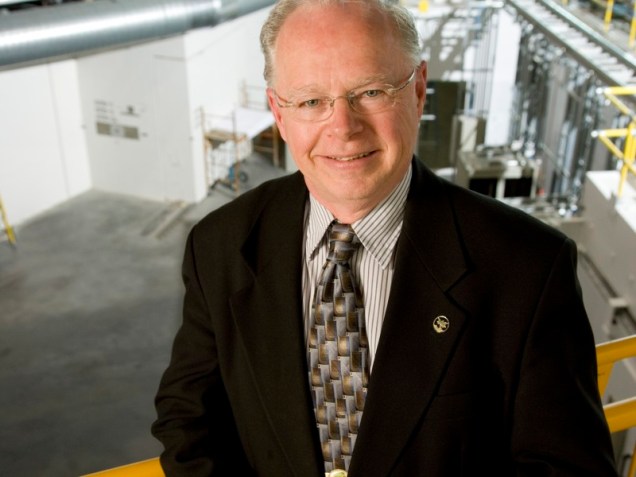
“The government is working on a national bioeconomy strategy, which started with our new federal government attending the COPS meeting in Paris. Discussions and consultations are now taking place with the provinces and the Canadian public with the intent to have a federal strategy in draft form later this year.” To say it – in this long exclusive interview with Il Bioeconomista – is Murray McLaughlin, executive director of Bioindustrial Innovation Canada, who was recognized in the top 100 global leaders in the Advanced Bioeconomy at Biofuels Digest Conference in Washington, 2016. With him we talk about bioeconomy in Canada, climate change, biomass, Green public procurement, carbon tax and other policies. Murray McLaughlin has held various positions in the private, government and non-profit sectors such as director of Business Development for the Canadian Light Source, president of Ontario Agri-Food Technologies, deputy minister of Saskatchewan Agriculture and Food, and president of Ag-West Biotech Inc. He co-chairs the Industrial Bioproducts Value Chain Roundtable which is a partnership between Industry and AAFC for the bioeconomy. He is a graduate of Nova Scotia Agricultural College, McGill (B. Sc. Agr.) and Cornell (MSC and PhD), and has an Honorary Doctorate Degree from Dalhousie University.
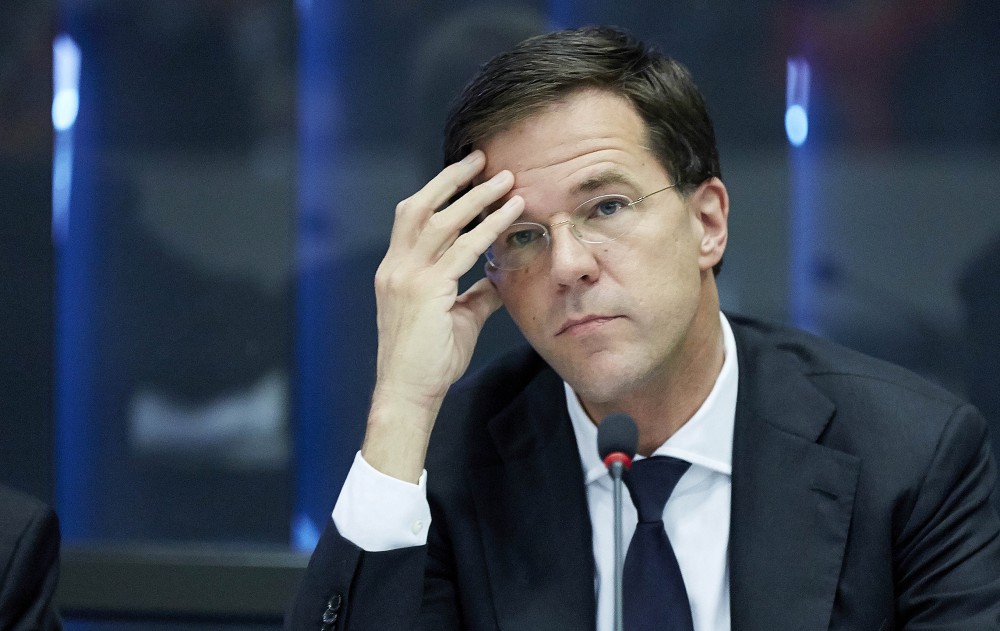
The Dutch government is planning to join the Mission Innovation coalition. The global initiative aims to accelerate public and private innovation in order to make clean energy affordable for consumers, as well as creating “green” jobs and commercial opportunities. Mission Innovation was announced by former Microsoft leader Bill Gates at the United Nations Climate Change Conference (COP21) in Paris last year. At the launch, 20 countries – Australia, Brazil, Canada, Chile, China, Denmark, EU, France, Germany, India, Indonesia, Italy, Japan, Mexico, Norway, Republic of Korea, Saudi Arabia, Sweden, UAE, UK and US – committed to doubling their respective clean energy R&D by 2020.
Waiting for the French national strategy, the bioeconomy moves forward in France. Global Bioenergies, IBN-One, Cristal Union and L’Oréal announced yesterday the launch of a 44-month industrial and commercial project focused on the first bio-isobutene plant.
The bioeconomy in the United States of America takes another relevant step forward, investing not only in the development of bioproducts but also in education and training. The U.S. Department of Agriculture (USDA) yesterday announced the availability of $21 million to support the development of regional systems in sustainable bioenergy and biobased products, as well as education and training for the next generation of scientists that will expand availability of renewable, sustainable goods and energy. This funding is available through the Agriculture and Food Research Initiative (AFRI), authorized by the 2014 Farm Bill and administered by USDA’s National Institute of Food and Agriculture (NIFA).
Marlon Brando as don Vito Corleone in The Godfather
During my ten years at Accenture in Rome my boss always made a point of checking that in our bids for client work we were making them offers they couldn’t refuse. He’d been inspired by Marlon Brando in the Godfather, without the gun parts clearly. Our business grew from 300 to 3000 people.
The guys and gals at the European Commission in Brussels are right now putting the finishing touches to a Communication on Transport Decarbonisation, due out this summer. A Commission Communication is the closest thing there is to an EU law without actually being a law. If it’s any good it will set direction on transport decarbonisation for the next twenty years and go a long way to saving the planet from catastrophic climate change.
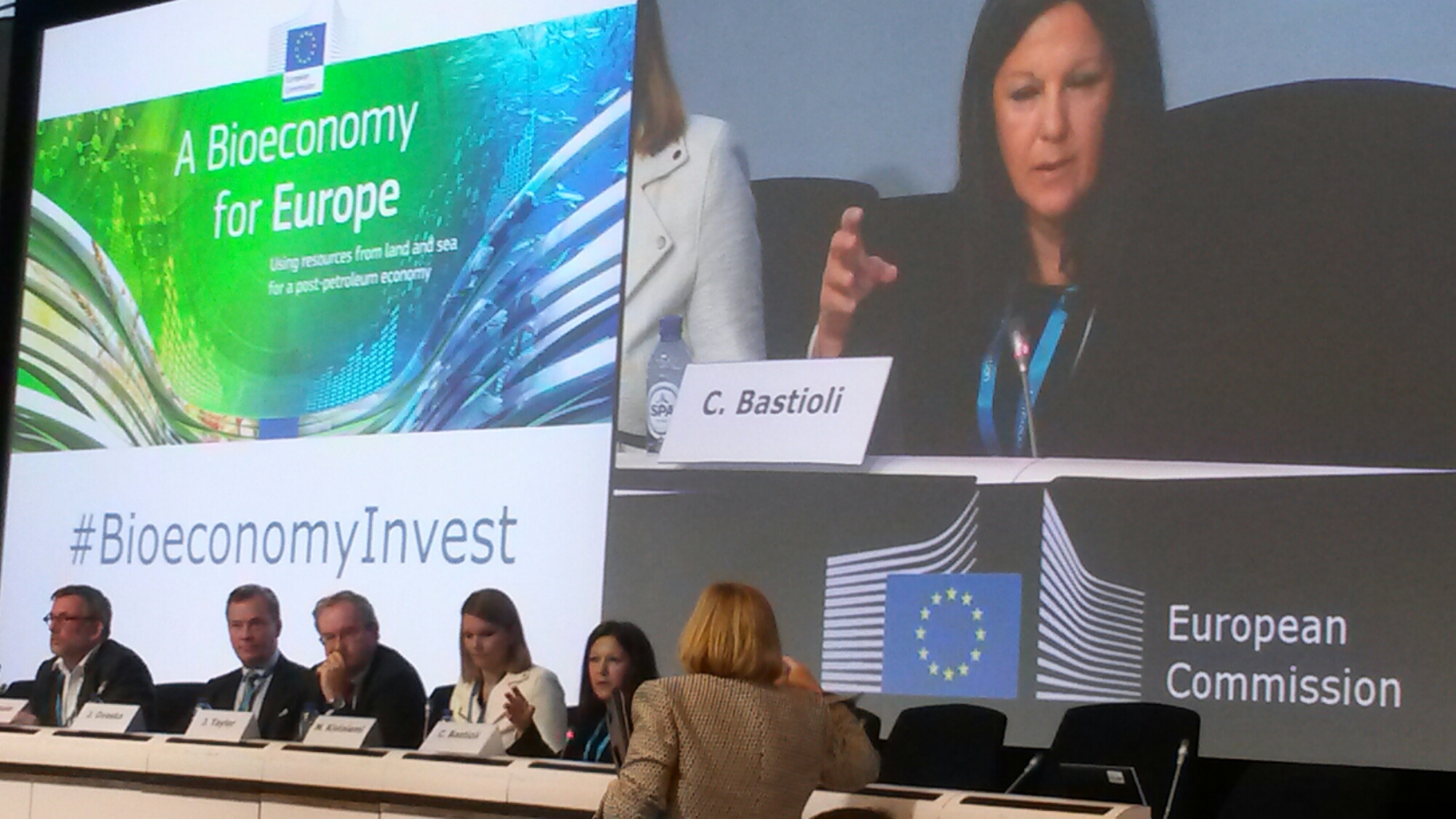
“To pass laws that can make a difference means overcoming the braking action of those who defend and feed the advantageous position, put into practice the good industry and multiply virtuous cases there are in our country. Much of the Italian industry has invested and is investing in the development of new products and “green” technologies, and now considers sustainability as an opportunity rather than a constraint”. Catia Bastioli talks to Il Bioeconomista. In this exclusive interview with the Chief Executive Officer of Novamont, considered as the beacon of Italian bioeconomy, we talk about bioeconomy, circular economy and climate change. A few days before the 4th EU Bioeconomy Stakeholders’ Conference in Utrecht, Bastioli gives us her vision to fully realize in Italy and Europe the new economy based on biological resources, able to create wealth and jobs, starting from the local areas.
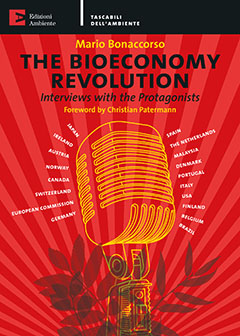
The ebook has the privilege of hosting the preface written by Christian Patermann, the man who is considered as the “father” of the European bioeconomy:
“The Bioeconomy Revolution” is not just another book to be added to the growing number of publications worldwide on the Bioeconomy and more recently on the so-called circular economy.
Another brick towards the European Bioeconomy. The European Commission organises from 12 to 13 April in Utrecht, The Netherlands, the EU Bioeconomy Stakeholders’ Conference. Four years on from the launching of the EU’s Bioeconomy Strategy, Brussels in collaboration with the Dutch Presidency analyses the achievements and the opportunities ahead in the two-day conference.
Raffaele Liberali in Metaponto (Basilicata, Italy)
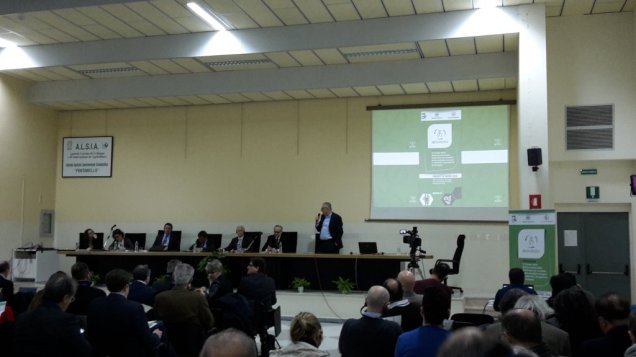
Italy will have its own strategy on bioeconomy by next summer. This was announced by Mario Calderini, representative of the Ministry of Education, University and Research, yesterday in Metaponto, Basilicata, during the launch event of the regional bioeconomy cluster. Good news, then, for the bioeconomy in Italy, where it seems that the issue is increasingly on the agenda of the institutions.




 IL BIOECONOMISTA