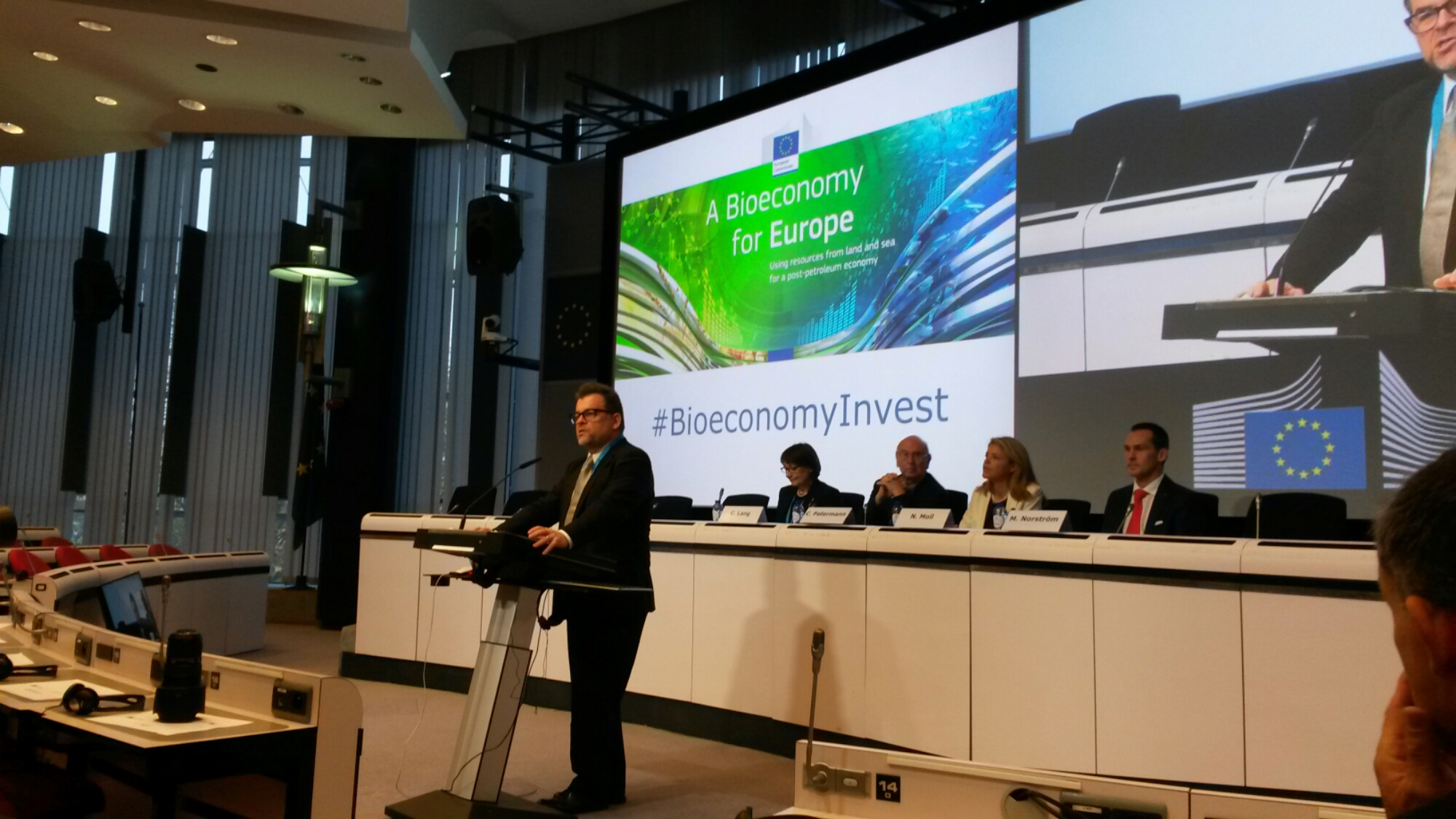
Christine Lang, chairwoman of the German Bioeconomy Council, presents the Communique
Germany leads the world bioeconomy. Berlin was for three days (24-26 November) the venue of the Global Bioeconomy Summit which was attended by many of the protagonists of this meta-sector from Europe, Asia, Africa and America (approximately 700 people).
Chris Patermann at the Bioeconomy Investment Summit, Brussels, 9-10 November
Chris Patermann is simply the “father” of the European bioeconomy. Since January 2004 he was Programme Director for “Biotechnology, Agriculture & Food” Research at the Research Directorate-General of the European Commission, which from 2007 also comprised Aquaculture and Fisheries as well as Forestry. During these years he was responsible for the elaboration of the new concept of the Knowledge Based Bioeconomy (KBBE), which today is known as bio-based economy or more simply bioeconomy in Europe. He was also appointed Chairman of the oldest Committee between EU Member States and the European Commission, the Standing Committee on Agricultural Research, SCAR. He also served for 4 years as co-chair in the important EC-US Task Force Life Sciences and Biotechnology Research. In August 2007 Christian Patermann retired. He now lives in Bonn and advises public and private institutions and companies, among them the largest German Land NorthRhine-Westphalia, the Fraunhofer Society, the Swiss Agricultural Research Council etc.
With Chris Patermann, who is one of the most influential people in the European bioeconomy, we talk – in this long exciting exclusive interview – about what was the vision that inspired the beginnings of the European strategy on bioeconomy, but also the future of this meta-sector through which the European Union can aspire to economic growth, creation of jobs and environmental sustainability.
Former AC Milan and France midfielder Mathieu Flamini is a bioeconomy’s supporter. He has revealed that he is one of the people behind GFBiochemicals, a bio-based company that has developed a process to produce levulinic acid on an industrial scale.
We can now drink our espresso and support the bioeconomy and circular economy, thanks to a wholly biodegradable and compostable coffee capsule for espresso machines. Once consumed, it can be collected with the organic waste and processed industrially to become compost. This is the circular economy principle of zero waste, according to which all used products can return to being a resource, with significant environmental benefits. The project – created and used by two of the most popular Italian companies, Novamont and Lavazza – won the Ecomondo Sustainable Development Award 2015 for the category “Waste and Resources”.
The European bioeconomy seeks a compass. Yesterday ended the Bioeconomy Investment Summit organised by the European Commission in Brussels, which has had starring the main players of the bioeconomy made in Europe. The event, which had as its clever director John Bell – director of Bioeconomy Directorate – leaves many open questions, but mainly provides the framework of a Europe divided between countries, between sectors, between large and small companies, including those who require a system of public procurement as the Biopreferred Programme in the US (with standards and labels) and those who say it is up to the market, those who say the bioeconomy is integral part of circular economy and those who say that it is better to run on two parallel planes. In short, adelante con juicio.
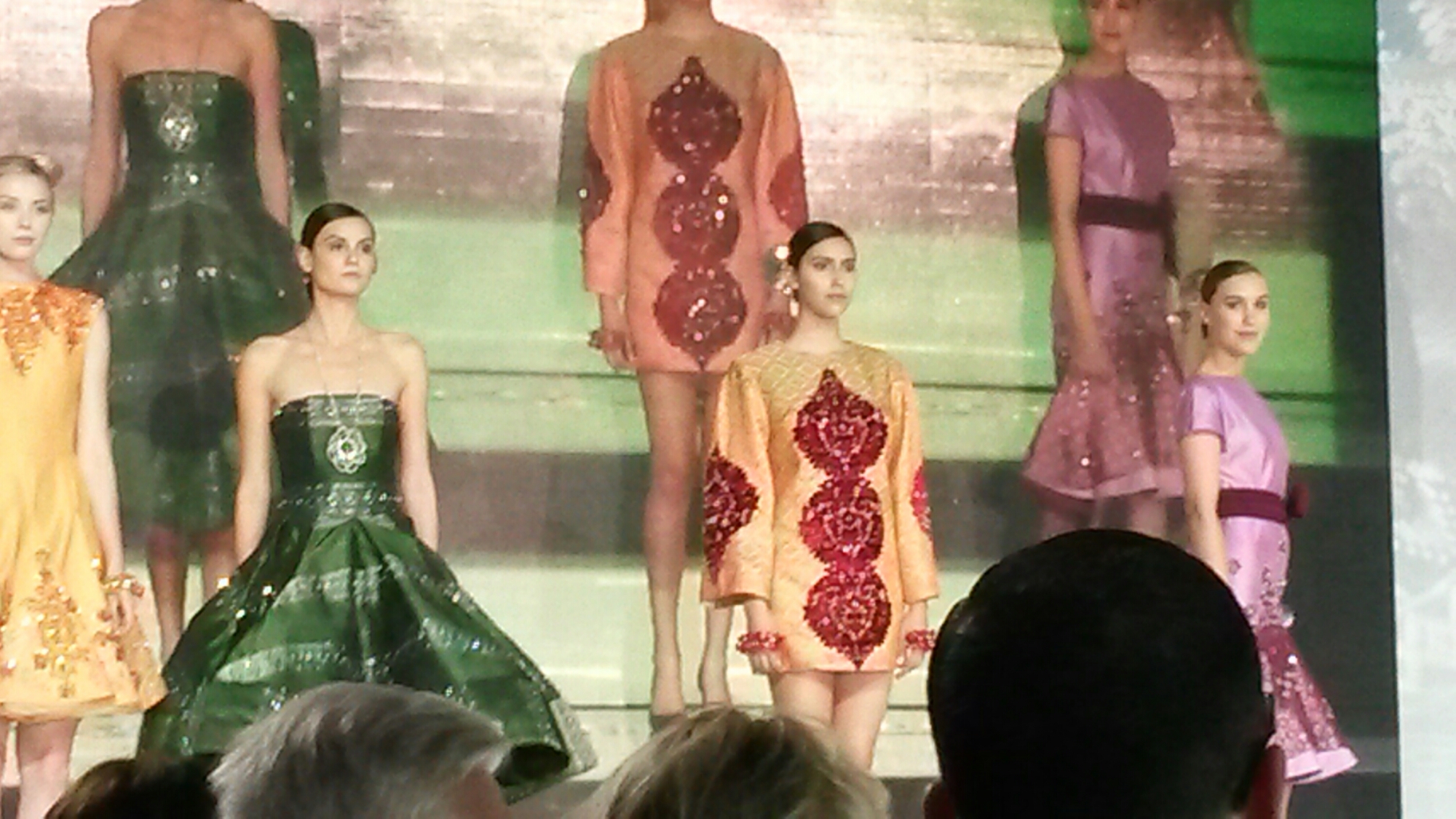
The bioeconomy increasingly concerns also the textile industry. Fulgar, an Italian company that operates worldwide in the synthetic yarns market and is a leader in the production and distribution of Polyamide 6.6 and covered spandex in the textile and technical sectors, has launched Evo, the latest generation hi-tech fibre combining high-performance personality and 100% biological heart. It is – the company says – a perfect synthesis of performance and environmental awareness.
Without biotechnology there is no bioeconomy. And the bioeconomy is integral part of circular economy. This is the strong message that comes from EFIB, the European Forum on industrial biotechnology and the bioeconomy which was held in Brussels on October 27 to 29, organized by EuropaBio and Smithers Rapra.
Biobased Delta, BioEconomy, BioVale and Industries & Agro Ressources, the leading bioeconomy clusters in the Netherlands, the UK, Germany and France have joined forces as the 3BI intercluster – Brokering Bio-Biobased Innovation. Their goal is to support European companies to access important new bioeconomy markets successfully. The ceremony for a formal signing of an agreement between the 4 clusters took place today at the EFIB forum in Brussels.


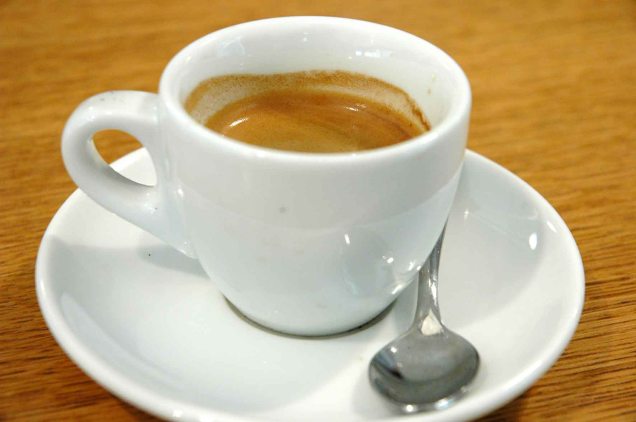 We can now drink our espresso and support the bioeconomy and circular economy, thanks to a wholly biodegradable and compostable coffee capsule for espresso machines. Once consumed, it can be collected with the organic waste and processed industrially to become compost. This is the circular economy principle of zero waste, according to which all used products can return to being a resource, with significant environmental benefits. The project – created and used by two of the most popular Italian companies, Novamont and Lavazza – won the Ecomondo Sustainable Development Award 2015 for the category “Waste and Resources”.