
Gli amministratori delegati di sette grandi aziende, tra produttori europei di biocarburanti e linee aeree, hanno lanciato oggi a Bruxelles una nuova iniziativa industriale per accelerare lo sviluppo in Europa dei biocarburanti sostenibili.
Gli amministratori delegati di sette grandi aziende, tra produttori europei di biocarburanti e linee aeree, hanno lanciato oggi a Bruxelles una nuova iniziativa industriale per accelerare lo sviluppo in Europa dei biocarburanti sostenibili.
 This is part of the text of David Cameron (UK’s Prime Minister)’s speech at the launch of DECC (Department of Energy and Climate Change)’s energy efficiency mission
I want to tell you why I believe energy efficiency is so important. Yes of course it is a vital part of how we cut carbon emissions and continue to meet the ambitious targets set out in the Climate Change Act, which will allow us to meet growing energy demand in a way that protects the environment for our children, grandchildren and generations to come. Of course that is important, but my argument today is not just about doing what is right for our planet, but doing what is right for our economy too.
 “By having the first full scale 2G biorefinery (Mossi & Ghisolfi’s Biorefinery in Crescentino, editor’s note) I am convinced that Italy will play one of the important and leading roles in 2G bioeconomy on a European level. We hope very much that the next full scale plant will be in Denmark.The EU countries have a unique chance to be first movers and preferred partners in the future global bioeconomy”. To say it, in this interview, is Anne Grete Holmsgaard, the director of the BioRefining Alliance, the Danish partnership organization working to promote 2G biofuels and bioeconomy in Europe. Denmark has a leading role in the European bioeconomy. With Anne Grete Holmsgaard we talk about BioRefining Alliance, but especially bioeconomy and European policies to foster it. “We need – says the BioRefining Alliance’s director – the EU to speed up and decide on a better regulation with targets for 2G biofuels, which will give a very clear signal to investors.
Interview by Mario Bonaccorso
 I am certain that my fellow Americans expect that on my induction into the Presidency I will address them with a candor and a decision which the present situation of our Nation impels. This is preeminently the time to speak the truth, the whole truth, frankly and boldly. Nor need we shrink from honestly facing conditions in our country today. This great Nation will endure as it has endured, will revive and will prosper. So, first of all, let me assert my firm belief that the only thing we have to fear is fear itself—nameless, unreasoning, unjustified terror which paralyzes needed efforts to convert retreat into advance. In every dark hour of our national life a leadership of frankness and vigor has met with that understanding and support of the people themselves which is essential to victory. I am convinced that you will again give that support to leadership in these critical days.
 Versalis (Italy), a global leader in elastomers and a subsidiary of Eni, and Yulex Corporation (Arizona, USA), an agricultural-based biomaterials company, announced today they are forming a strategic partnership to manufacture guayule-based biorubber materials and will launch an industrial production complex in Southern Europe.
The partnership will cover the entire manufacturing chain from crop science to biorubber extraction to the construction of a biomass power station. Versalis will manufacture materials for various applications: after an initial focus on consumer and medical specialty markets, the target is to optimize the process to reach the tire industry.
The partnership will leverage Yulex’s core competencies including crop science and biorubber extraction technologies, to boost Versalis’ bio-based portfolio. The investment will include an ambitious research project to develop technologies targeting the tire industry.
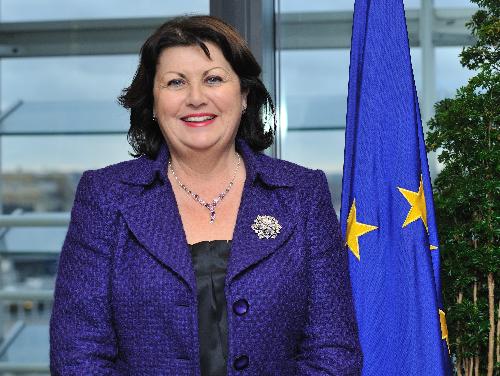
“Europe and the rest of the world must cope with an expected 70 per cent increase in food demand, and a 100 per cent increase in energy demand, by 2050. Under these circumstances, we must prepare ourselves for a ‘post-petroleum’ society, one in which we use our natural resources more sustainably”. In this exclusive interview European Commissioner for Research, Innovation and Science, Màire Geoghegan-Quinn, talks about bioeconomy and European policies to support it. And tells us that “The Italian government is aware of the benefits of a coordinated bioeconomy strategy and expressed interest in possibly hosting the annual Bioeconomy Stakeholders Conference in Italy in 2014”.
Interview by Mario Bonaccorso
 Il sostegno alla crescita della bioeconomia in Europa è conciliabile con il fiscal compact? È possibile sostenere la crescita dell’economia con una politica economica vincolata per i prossimi vent’anni all’obiettivo di riduzione del debito di circa 50 miliardi all’anno (certo, con variazioni a seconda che si avvii o meno la tanto attesa ripresa)?
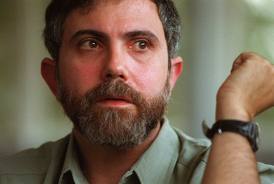
Queste domande ci piacerebbe potessero fare il proprio ingresso nella campagna elettorale italiana. Per trovare risposte da tutti gli schieramenti. Perché se in tanti oggi corrono (a parole) a (ri)scoprire Paul Krugman, il premio Nobel per l’economia che da sempre è critico con la politica europea di austerità e di mantenimento della stabilità dei prezzi, in quanto politica recessiva, è ancora vivo nella mente il ricordo dell’approvazione da parte del Parlamento lo scorso luglio (360 voti a favore alla Camera) del “Trattato sulla stabilità, sul coordinamento e sulla governance nell’Unione economica e monetaria”. In poche parole: il fiscal compact, che ha reso costituzionali vincoli durissimi per le economie e i bilanci nazionali.
 Another brick towards the European Bioeconomy. The European Commission organises from 14 to 15 February in Dublin the conference “Bioeconomy in the EU: achievements and directions for the future”.
One year on from the launching of the EU’s Bioeconomy Strategy, Brussels in collaboration with the Irish Presidency analyses the achievements and the opportunities ahead in the two-day conference.
Commissioner for Science, Research and Innovation, Máire Geoghegan-Quinn, and the Irish Minister for Agriculture, Food and the Marine , Simon Coveney, will open this high level meeting that takes place in the Dublin Castle.
 “Negli oceani esiste un grande potenziale per la scoperta di nuovi organismi, molecole e materiali, che possono essere utilizzati in campo biomedico, alimentare ed energetico, come ad esempio principi terapeutici e nutritivi”. A sostenerlo è Ilaria Nardello, una ricercatrice italiana a cui è stato affidato il coordinamento del Programma nazionale irlandese di ricerca nel campo della biotecnologia marina. Un progetto ambizioso, inserito in un’articolata strategia nazionale – ci dice Nardello – “che ha l’obiettivo di utilizzare le risorse marine per potenziare l’economia irlandese e ha comportato un investimento di circa 120 milioni di euro di fondi pubblici per la ricerca e lo sviluppo in tutte le aree del marino, nel periodo 2007-2010”.
L’Irlanda, presidente di turno dall’Unione europea, è uno dei paesi che si è già dotato di un Piano nazionale per la bioeconomia. In questa intervista ne approfondiamo i punti essenziali, per scoprire come “nonostante un clima di grandi incertezze legate ad una fortissima crisi finanziaria, l’Irlanda continua a scommettere sul sistema innovazione e sulla ricerca come fattori di sviluppo economico”.
di Mario Bonaccorso
 Si sa, il business è business. E a questo deve aver pensato la cancelliera tedesca, Angela Merkel, più che al rispetto dei diritti civili in Ucraina e all’ex premier, Julia Timoshenko, che resta in carcere. Ricorderete che partì proprio da Merkel l’idea di boicottare l’Ucraina ai recenti campionati europei di calcio (tenutisi proprio in Polonia e Ucraina). Dicevamo, il business è business e così la Germania, messi da parte gli scrupoli estivi, intende aiutare l’Ucraina a stabilire la propria produzione di biocombustibili nel 2013. È quanto rende noto il ministero ucraino per le Politiche agricole e l’alimentazione (minagro.gov.ua), diffondendo una dichiarazione di Juergen Keinhorst, rappresentante del ministero federale tedesco per l’Ambiente intervenuto a un recente meeting economico ucraino-tedesco. Secondo Keinhorst, la Repubblica federale tedesca è pronta a investire in progetti piloti nel settore in Ucraina.
 IL BIOECONOMISTA