Danish BioRefining Alliance: “We need the EU to speed up and decide on a better regulation with targets for 2G biofuels”

balle di fieno“By having the first full scale 2G biorefinery (Mossi & Ghisolfi’s Biorefinery in Crescentino, editor’s note) I am convinced that Italy will play one of the important and leading roles in 2G bioeconomy on a European level. We hope very much that the next full scale plant will be in Denmark.The EU countries have a unique chance to be first movers and preferred partners in the future global bioeconomy”. To say it, in this interview, is Anne Grete Holmsgaard, the director of the BioRefining Alliance, the Danish partnership organization working to promote 2G biofuels and bioeconomy in Europe. Denmark has a leading role in the European bioeconomy. With Anne Grete Holmsgaard we talk about BioRefining Alliance, but especially bioeconomy and  European policies to foster it. “We need – says the BioRefining Alliance’s director – the EU to speed up and decide on a better regulation with targets for 2G biofuels, which will give a very clear signal to investors.

Interview by Mario Bonaccorso

Continue reading

New U.S. Biofuel Proposals Could Draw Heavily from Food Sources

biofuelsNew biofuel requirements proposed by the U.S. Environmental Protection Agency (EPA) are being met with concern by a spectrum of interest groups from environmentalists to the oil industry, with some warning that a gap between the proposal and existing law could force the government to draw on food-based alternative fuels.

The announcement, which opens a 45-day feedback period, sets standards under the country’s landmark Renewable Fuel Standard programme. That 2007 legislation established long-term goals for alternative fuel use – 36 billion gallons a year by 2022 – for which the EPA is mandated to set yearly requirements for the country’s petroleum importers and refiners.

Continue reading

Waiting for a New Global New Deal. Is there a new F.D. Roosevelt in Europe (and in Italy)?

new deal rooseveltI am certain that my fellow Americans expect that on my induction into the Presidency I will address them with a candor and a decision which the present situation of our Nation impels. This is preeminently the time to speak the truth, the whole truth, frankly and boldly. Nor need we shrink from honestly facing conditions in our country today. This great Nation will endure as it has endured, will revive and will prosper. So, first of all, let me assert my firm belief that the only thing we have to fear is fear itself—nameless, unreasoning, unjustified terror which paralyzes needed efforts to convert retreat into advance. In every dark hour of our national life a leadership of frankness and vigor has met with that understanding and support of the people themselves which is essential to victory. I am convinced that you will again give that support to leadership in these critical days.

Continue reading

Versalis and Yulex partner to produce guayule-based biorubber

versalis eniVersalis (Italy), a global leader in elastomers and a subsidiary of Eni, and Yulex Corporation (Arizona, USA), an agricultural-based biomaterials company, announced today they are forming a strategic partnership to manufacture guayule-based biorubber materials and will launch an industrial production complex in Southern Europe.

The partnership will cover the entire manufacturing chain from crop science to biorubber extraction to the construction of a biomass power station. Versalis will manufacture materials for various applications: after an initial focus on consumer and medical specialty markets, the target is to optimize the process to reach the tire industry.

The partnership will leverage Yulex’s core competencies including crop science and biorubber extraction technologies, to boost Versalis’ bio-based portfolio. The investment will include an ambitious research project to develop technologies targeting the tire industry.

Continue reading

Exclusive interview with European Commissioner Màire Geoghegan-Quinn: “We must prepare ourselves for a post-petroleum society”

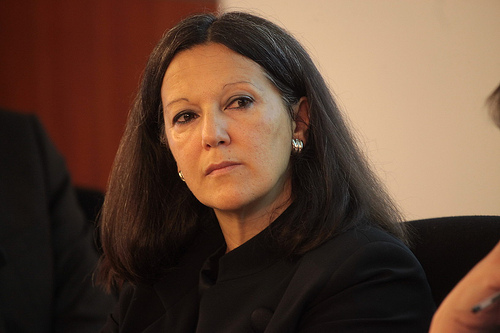
european commissioner maire geoghegan-quinn

“Europe and the rest of the world must cope with an expected 70 per cent increase in food demand, and a 100 per cent increase in energy demand, by 2050. Under these circumstances, we must prepare ourselves for a ‘post-petroleum’ society, one in which we use our natural resources more sustainably”. In this exclusive interview European Commissioner for Research, Innovation and Science, Màire Geoghegan-Quinn, talks about bioeconomy and European policies to support it. And tells us that “The Italian government is aware of the benefits of a coordinated bioeconomy strategy and expressed interest in possibly hosting the annual Bioeconomy Stakeholders Conference in Italy in 2014”.

Interview by Mario Bonaccorso

Continue reading

Il secondo mandato di Obama è bio-based

secondo mandato obamaBarack Obama ha giurato per il suo secondo mandato. Nel discorso inaugurale pronunciato a Washington ha toccato tutti i temi del dibattito politico americano: economia, sanità, cambiamenti climatici (un punto su cui ha insistito molto e che invece era rimasto in secondo piano durante la campagna elettorale), armi da fuoco, diritti civili di donne, gay, immigrati e minoranze. “L’America è in ripresa, un decennio di guerre sta finendo, l’economia sta ripartendo. Ora più che mai dobbiamo agire insieme come una nazione, un popolo. Le nostre possibilità sono illimitate”.

Saranno quattro anni in cui l’America cercherà di spingere sull’acceleratore della ripresa economica. E a contribuire alla spinta sarà certamente il piano della Casa Bianca per la bioeconomia. A sottolineare quanto Obama crede alle enormi potenzialità dell’economia bio-based  è arrivata nei giorni scorsi la sua scelta di confermare capo del Dipartimento dell’Agricoltura, Tom Vilsack, uno dei pochi ad essersi salvato dalle modifiche apportate dal presidente al suo secondo gabinetto.

Continue reading

Marginal lands are prime fuel source for alternative energy

bioetanolo distributoreMarginal lands ­– those unsuited for food crops – can serve as prime real estate for meeting the nation’s alternative energy production goals.

In the current issue of Nature, a team of researchers led by Michigan State University shows that marginal lands represent a huge untapped resource to grow mixed species cellulosic biomass, plants grown specifically for fuel production, which could annually produce up to 5.5 billion gallons of ethanol in the Midwest alone.

“Understanding the environmental impact of widespread biofuel production is a major unanswered question both in the U.S. and worldwide,” said Ilya Gelfand, lead author and MSU postdoctoral researcher. “We estimate that using marginal lands for growing cellulosic biomass crops could provide up to 215 gallons of ethanol per acre with substantial greenhouse gas mitigation.”

Continue reading

La bioeconomia tra Krugman e il fiscal compact

krugmanIl sostegno alla crescita della bioeconomia in Europa è conciliabile con il fiscal compact? È possibile sostenere la crescita dell’economia con una politica economica vincolata per i prossimi vent’anni  all’obiettivo di riduzione del debito di circa 50 miliardi all’anno (certo, con variazioni a seconda che si avvii o meno la tanto attesa ripresa)?

Queste domande ci piacerebbe potessero fare il proprio ingresso nella campagna elettorale italiana. Per trovare risposte da tutti gli schieramenti. Perché se in tanti oggi corrono (a parole) a (ri)scoprire Paul Krugman, il premio Nobel per l’economia che da sempre è critico con la politica europea di austerità e di mantenimento della stabilità dei prezzi, in quanto politica recessiva, è ancora vivo nella mente il ricordo dell’approvazione da parte del Parlamento lo scorso luglio (360 voti a favore alla Camera) del “Trattato sulla stabilità, sul coordinamento e sulla governance nell’Unione economica e monetaria”. In poche parole: il fiscal compact, che ha reso costituzionali vincoli durissimi per le economie e i bilanci nazionali.

Continue reading

In Sardinia the first Italian start-up that develops biopesticides

agricoltura sardegna“The landing in a sustainable agriculture is one of the major challenges of the third millennium, with a major impact on the health of humans and animals, biodiversity and the balance of the entire ecosystem.” To say it in this interview is Luca Ruiu, a researcher at the University of Sassari, founder and CEO of Bioecopest, a spin-off of the same university that develops natural biopesticides, “antagonistic microorganisms harmful for pests you want to eradicate from crops, but absolutely harmless for those who then goes to eat fruit and vegetables treated in this way.” With Ruiu we talk on biopesticides, sustainable agriculture and bioeconomy as a driver for the economic growth and the creation of new high-skilled employment.

Interview by Mario Bonaccorso

Continue reading

Another brick in the European Bioeconomy’s wall

dublin castleAnother brick towards the European Bioeconomy. The European Commission organises from 14 to 15 February in Dublin the conference “Bioeconomy in the EU: achievements and directions for the future”.

One year on from the launching of the EU’s Bioeconomy Strategy, Brussels in collaboration with the Irish Presidency analyses the achievements and the opportunities ahead in the two-day conference.

Commissioner for Science, Research and Innovation, Máire Geoghegan-Quinn, and the Irish Minister for Agriculture, Food and the Marine , Simon Coveney, will open this high level meeting that takes place in the Dublin Castle.

Continue reading